
Prebiotics vs. Probiotics: What’s the Difference—and Do You Really Need Both?
Images by Herbal Journal & OpenAI
Walk through the health section of almost any grocery store and you’ll quickly find shelves lined with probiotic capsules, drinks, powders, and gummies. At the same time, you’ll hear more people talking about the importance of feeding your “good gut bacteria” with prebiotic foods. It can leave many people wondering: What’s the difference? Do I need both? And if I start taking probiotics and feel worse, does that mean they’re working?
The short answer is that prebiotics and probiotics serve different—but complementary—roles in supporting a healthy digestive system. Understanding how they work can help you make informed choices without falling for common myths or expensive marketing claims.
Your Gut Is Home to an Entire Ecosystem
Inside your digestive tract lives a remarkably diverse community of bacteria, fungi, and other microorganisms known collectively as the gut microbiome. While the word “bacteria” often carries a negative reputation, many of these organisms perform essential functions that help keep us healthy.
A balanced microbiome helps:
- Digest certain foods and fibers.
- Produce vitamins such as vitamin K and several B vitamins.
- Support healthy immune function.
- Help maintain the protective lining of the digestive tract.
- Influence metabolism and even communicate with the nervous system through what researchers call the gut-brain axis.
Like a healthy woodland, the microbiome depends on diversity and balance rather than any single species dominating the landscape.
What Are Probiotics?
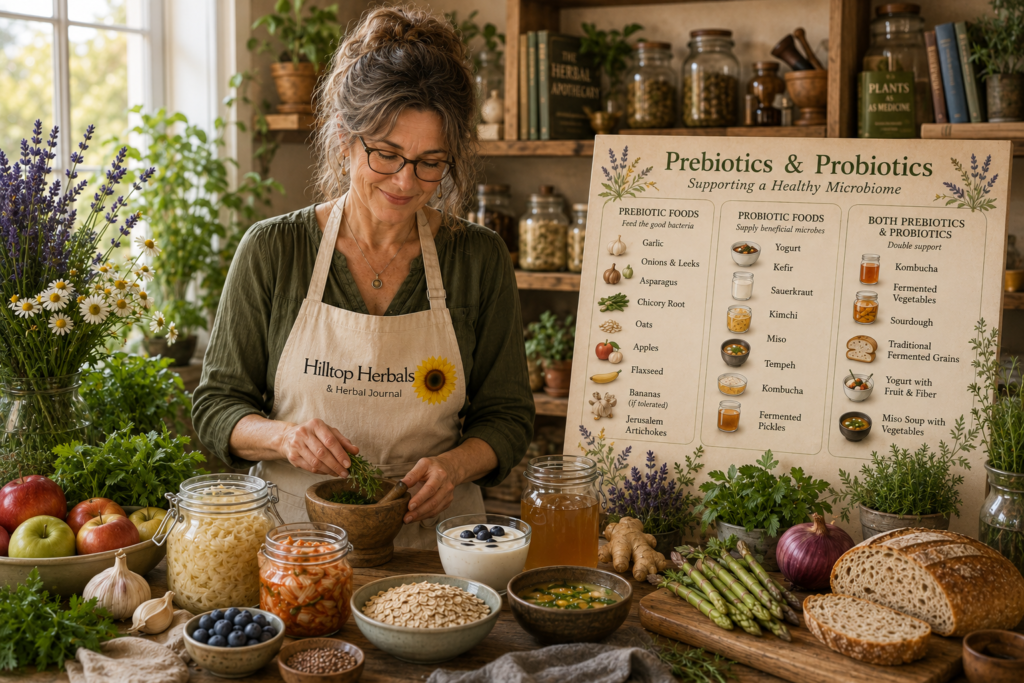
Probiotics are live microorganisms that may provide health benefits when consumed in adequate amounts. They are found naturally in fermented foods and are also available as dietary supplements.
Common food sources include:
- Yogurt with live active cultures
- Kefir
- Sauerkraut
- Kimchi
- Miso
- Tempeh
- Naturally fermented pickles
Different probiotic strains perform different functions. A product that works well for one digestive concern may not be appropriate for another, which is why choosing a probiotic based solely on the highest colony-forming unit (CFU) count isn’t always the best approach.
What Are Prebiotics?
If probiotics are the beneficial bacteria themselves, prebiotics are their food.
Prebiotics are specialized plant fibers that pass through the upper digestive tract largely undigested until they reach the colon, where they nourish beneficial microbes.
Foods naturally rich in prebiotics include:
- Garlic
- Onions
- Leeks
- Asparagus
- Chicory root
- Jerusalem artichokes
- Oats
- Apples
- Flaxseed
- Bananas (if tolerated)
As these fibers are fermented by beneficial bacteria, they produce compounds called short-chain fatty acids, which help nourish the cells lining the colon and support a healthy digestive environment.
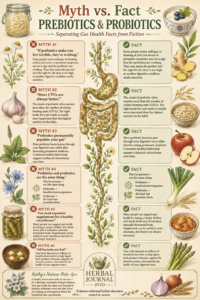
Download this Infographic
Do You Need Both?
For many people, the answer is yes—but food is often the best place to begin.
Rather than relying immediately on supplements, consider building meals around whole foods that naturally support a healthy microbiome.
Aim for a balanced diet that includes:
- A variety of colorful vegetables
- Fruits that fit your individual health needs
- Whole grains, if tolerated
- Healthy sources of protein
- Naturally fermented foods
- Fiber-rich plant foods
This approach provides both beneficial organisms and the nourishment they need to thrive.
“If I Feel Worse, That Means It’s Working”…Right?
This is one of the most common misconceptions surrounding probiotics.
Some people experience temporary gas, bloating, or mild changes in bowel habits when first increasing probiotics or fiber. These symptoms often improve as the digestive system adapts.
However, feeling significantly worse is not proof that a probiotic is “working.”
Persistent abdominal pain, severe bloating, fever, vomiting, prolonged diarrhea, or worsening digestive symptoms should not be ignored. These may indicate that the product is not a good fit for you, that it was introduced too quickly, or that another digestive condition deserves medical evaluation.
A gentle approach—starting slowly and paying attention to how your body responds—is often the most comfortable and sustainable path.
An Herbalist’s Perspective
As herbalists, we often think less about “fixing” the microbiome and more about creating an environment where balance can return naturally.
Several herbs have traditionally been used to soothe and support the digestive tract, including:
- Marshmallow (Althaea officinalis) – rich in soothing mucilage that helps calm irritated tissues.
- Chamomile (Matricaria chamomilla) – traditionally used to ease digestive discomfort and occasional gas.
- Lemon Balm (Melissa officinalis) – supports healthy digestion while gently calming the nervous system.
- Ginger (Zingiber officinale) – encourages healthy digestive function and may help relieve occasional nausea.
- Plantain (Plantago major) – traditionally valued for its soothing properties and support of healthy mucous membranes.
Rather than replacing a healthy diet, these herbs can complement broader lifestyle choices that encourage digestive wellness.
Supporting Your Gut Naturally
Healthy digestion isn’t built in a day. Small, consistent habits often have a greater impact than dramatic cleanses or expensive supplements.
Simple steps include:
- Eat a variety of plant foods each week.
- Include adequate protein in your meals.
- Stay well hydrated.
- Manage stress whenever possible.
- Get regular physical activity.
- Introduce new fiber gradually.
- Choose probiotic supplements only when they are appropriate for your individual needs.
Safety & Contraindications
While prebiotic foods and probiotics are generally well tolerated, they are not appropriate for everyone.
Use extra caution if you:
- Have a severely weakened immune system.
- Have recently undergone major gastrointestinal surgery.
- Have a central venous catheter.
- Have been diagnosed with small intestinal bacterial overgrowth (SIBO), where some probiotics or fermentable fibers may worsen symptoms.
- Experience persistent or severe digestive symptoms that have not been medically evaluated.
If you have chronic medical conditions—including kidney disease, thyroid disorders, inflammatory bowel disease, or other complex health concerns—consult your healthcare provider before beginning new supplements. If you take levothyroxine, separate high-fiber supplements from your medication by several hours to help avoid interfering with its absorption.
Final Thoughts
The healthiest gut isn’t created by chasing the latest supplement or fad. It grows through consistent nourishment, diversity, and balance.
For many people, building a varied diet rich in whole foods, supporting digestion with appropriate herbs, and making thoughtful lifestyle choices will do more for long-term gut health than relying on a single capsule alone.
Remember, every person’s microbiome is unique. What works well for one individual may not work the same way for another. Listen to your body, make changes gradually, and seek personalized guidance when needed.
Be sure to download our Infographics:
Prebiotics vs Probiotics: Myth vs Fact Infographic
Prebiotics & Probiotics Reference Sheet
Thanks for reading! Kathy the Hilltop Herb Woman
References
- International Scientific Association for Probiotics and Prebiotics (ISAPP). Probiotics and Prebiotics: Definitions and Scope.
- Gibson GR, et al. The International Scientific Association for Probiotics and Prebiotics (ISAPP) Consensus Statement on the Definition and Scope of Prebiotics. Nature Reviews Gastroenterology & Hepatology.
- Hill C, et al. Expert Consensus Document: The ISAPP Consensus Statement on Probiotics.
- National Institutes of Health, Office of Dietary Supplements. Probiotics Fact Sheet for Health Professionals.
- Harvard T.H. Chan School of Public Health. The Nutrition Source: The Microbiome.

Kathy is an herbalist/naturopathy practitioner who is constantly researching to expand her knowledge. She came to herbalism after her migraine medicine was suddenly removed from the market and she had to find something new. After discovering the magic of herbs she’s never looked back. She is accredited by the International Practitioners of Holistic Medicine (IPHM) View her courses of study.