
The Herbalist’s Late-Summer First Aid Kit
Natural Support for Bites, Scrapes, Sore Muscles, Heat and Itchy Encounters
Late summer has a personality all its own. The garden is overflowing, the trails are still calling, and there are fairs, festivals, picnics and outdoor projects squeezed into every remaining hour of daylight.
Unfortunately, the mosquitoes are still enthusiastic, the weeds have become taller and more determined, and one innocent afternoon in the garden can leave us itchy, scraped, overheated and wondering why muscles we didn’t know we had are suddenly complaining.
This is the time of year when I like to keep a small herbal first-aid kit within easy reach. It isn’t meant to replace proper medical care or conventional first aid. It is simply a collection of practical items that can help with the minor discomforts that so often accompany late-summer living.
When the Bugs Won’t Leave You Alone
By August, mosquitoes, gnats, ticks and biting flies seem to have perfected their craft.
Prevention is always the first step. Wear protective clothing when possible, check yourself carefully for ticks after spending time outdoors and use an appropriate insect repellent. I also keep my Hilltop Herbals botanical bug spray nearby for times when I want an herbal option for the garden, deck or an evening outside.
Even with precautions, bites still happen. For a simple, uncomplicated bite, begin by gently washing the area. A cool compress can help calm itching and swelling, while a soothing herbal preparation may provide additional comfort. For more ideas about preventing bites naturally, be sure to read our article on natural tick, mosquito and gnat repellent.
Plantain (Plantago major or Plantago lanceolata) is one of my favorite herbs for those ordinary outdoor annoyances. The clean, fresh leaf has a long tradition of topical use for minor bites and irritated skin. A prepared plantain salve or properly stored herbal wash is much more practical for a first-aid kit than hoping you can identify and clean a fresh leaf when you need one.
Avoid scratching whenever possible. Broken skin creates an opportunity for infection, especially when hands and fingernails have been in the garden.
A bite or sting is no longer a home-care matter if it causes difficulty breathing, swelling of the face, mouth or throat, faintness, widespread hives or another rapidly developing reaction. Those symptoms require emergency medical care.
Scrapes, Small Cuts and Garden-Worn Skin
Thorns, rough branches, garden tools and gravel have a way of finding exposed skin.
Herbs come after basic wound care—not before it. Rinse a minor cut or scrape with clean running water and use steady pressure with clean gauze if it is bleeding. Seek medical care for deep or gaping wounds, punctures, animal bites, embedded debris, wounds caused by dirty or rusty objects, or bleeding that does not stop after firm pressure. MedlinePlus offers a helpful overview of basic first aid.
Once the area is clean and you have determined that the injury is truly minor, a gentle herbal salve may help protect and comfort the surrounding skin. This is where preparations containing herbs such as plantain, yarrow or calendula can earn their place in the kit.
Calendula is useful here, but it doesn’t have to be the star of every herbal conversation. In my late-summer kit, it is one member of the supporting cast.
Never pack fresh plant matter directly into an open wound. Freshly gathered herbs can carry soil, microorganisms and other contaminants. Prepared herbal products should also be reserved for the kinds of minor skin concerns for which they were intended.
Watch for increasing redness, warmth, swelling, pain, drainage, red streaks or fever. These may indicate infection and should be evaluated by a healthcare professional.
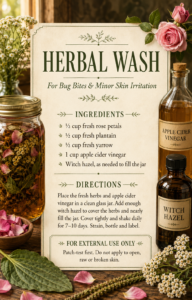 Herbal Wash for Bug Bites and Minor Skin Irritation
This make-ahead herbal preparation is one I frequently use to help calm the itching from ordinary bug bites.
Ingredients
- ½ cup fresh rose petals
- ½ cup fresh plantain
- ½ cup fresh yarrow
- 1 cup apple cider vinegar
- Witch hazel, as needed to fill the jar
Place the fresh herbs and apple cider vinegar in a clean glass jar. Add enough witch hazel to cover the herbs and nearly fill the jar. Cover tightly and shake daily for 7–10 days. Strain, bottle and label the finished wash.
For external use only: Moisten a cotton pad with the wash and gently pat it onto the affected area. Patch-test first, as the vinegar may sting or irritate sensitive skin. Do not apply it to open, raw or broken skin.
Adapted from a recipe shared through The Herbal Academy.
When the Garden Fights Back
Poison ivy, poison oak, stinging nettles and other irritating plants deserve more than a hurried paragraph—and we have already given them one.
If you suspect contact with poison ivy, poison oak or poison sumac, wash the exposed skin with soap and cool water as soon as possible. Clothing, gloves, tools and anything else that may carry the plant oil should also be cleaned. The FDA notes that prompt washing may remove some of the oil and help prevent it from spreading. Read the FDA’s poisonous-plant guidance.
For plant identification, immediate steps, soothing options and signs that medical care may be needed, visit our complete Itchy Plants: Poison Ivy, Poison Oak, Poison Sumac and Stinging Nettles article.
I would rather point you toward that full resource than repeat only part of the information here. An herbal first-aid kit is most useful when it includes good information along with the jars and bottles.
For Tired Muscles and Overworked Joints
Late summer is deceptive. We may not think of gardening, carrying produce, walking through fairs or tackling outdoor projects as “exercise,” but our muscles often disagree the next morning.
Rest and gentle movement are usually the first things I reach for. A warm shower or bath may feel wonderful when the muscles are simply tired and tight. Some people prefer a cool application after a particularly active day, especially if an area feels warm or irritated.
A topical herbal balm can also be a comforting part of the routine. I keep Big Cat Balm, which is my version of Tiger Balm, nearby for those ordinary, overworked-muscle days when my body reminds me that I did a little too much.
Apply topical products only to intact skin and wash your hands afterward. Keep them away from the eyes and other sensitive areas. A small patch test is wise when using any new preparation, particularly one containing essential oils. Also, don’t forget the tried-and-true Epsom salts bath. They are wonderful for achy muscles.
Not every ache should be rubbed and ignored. Sudden severe pain, marked swelling, weakness, numbness, inability to use a limb or pain following a significant fall or injury deserves proper evaluation.
When the Heat Takes More Than You Expected
Heat-related illness is the part of this article where herbs need to step aside.
When someone becomes overheated, the priorities are stopping activity, moving to a cooler place and beginning safe cooling measures. Symptoms of heat exhaustion can include heavy sweating, headache, nausea, dizziness, weakness, thirst and reduced urine output. The person should not be left alone while unwell.
Confusion, loss of coordination, fainting, seizures or very hot skin may indicate heat stroke. Heat stroke is a medical emergency: call 911 and begin cooling the person while help is on the way. The CDC emphasizes that an altered mental state requires immediate attention and that rapid cooling is the priority in severe heat illness. Review the CDC’s heat-illness guidance.
A Lesson I Learned the Hard Way
I know how frightening a heat emergency can be from personal experience. While visiting family in Colorado, barely a week after having COVID, we took what was supposed to be a “walk” in a national park. By the time I reached the bottom of the trail, I was seeing spots, my balance was off and my head was swimming. My health-tracking watch was sounding an alarm because my heart rate was above the safe threshold.
An ambulance crew and fire-rescue team had to carry me all the way back up in a Stokes basket—and thank heavens for them! Heat-related illness should never be ignored.
A cooling herbal tea may be pleasant on an ordinary summer afternoon, but it is not a treatment for heat exhaustion or heat stroke. When the body is struggling to regulate its temperature, this is not the moment to experiment with remedies.
Be particularly careful if you have heart or kidney disease, take medications that affect fluid balance or have been advised to restrict fluids, sodium or other electrolytes. Generic hydration advice may not be appropriate for every health history.
The Overlooked Part of First Aid: Rest and Recovery
We often treat the bite, wash the scrape and soothe the sore muscle—but forget that the body also needs time to recover.
After a long, hot or physically demanding day, begin with the basics: cool down, eat something nourishing, drink an appropriate amount of fluid and give your nervous system a chance to settle. Dim lights, quiet surroundings and a familiar evening routine can help signal that the busy part of the day is over.
For those who already know that valerian is appropriate for them, Bella Valeriana may be one option for occasional nighttime support. Valerian is not right for everyone, however, and the evidence for its effectiveness as a sleep aid is mixed. It can cause side effects and may interact with medications or other sedating substances. The long-term safety of valerian is also uncertain. The National Center for Complementary and Integrative Health provides a balanced valerian overview.
Check with a qualified healthcare professional before using herbal sleep products if you take medications, have a chronic health condition, are pregnant or breastfeeding, or are preparing for surgery. Do not combine a sedating herb with alcohol, sleep medications or other sedatives unless your healthcare provider has specifically approved it.
What I Keep Within Reach
Every herbalist’s kit looks a little different. Mine is practical rather than elaborate. For late summer, I want items that address the small problems most likely to interrupt an otherwise beautiful day:
- Botanical bug spray
- A soothing preparation for ordinary bites and minor skin irritation
- Plantain or a plantain-containing salve
- A gentle salve for clean, superficial scrapes
- Herbal wash for itchy bites on intact skin
- Big Cat Balm for tired, overworked muscles
- Clean gauze and bandages
- Tweezers and a tick-removal tool
- Soap or another way to clean exposed skin
- A cool pack
- Drinking water
- A printed first-aid reference
- Any personal emergency medications prescribed by a healthcare professional
I also check dates, labels and containers periodically. A leaking bottle, faded label or forgotten jar from several summers ago is not something I want to discover when I actually need it.
Herbs Have a Place—And So Does Good Judgment
An herbal first-aid kit should help us respond thoughtfully to life’s smaller mishaps. It should never persuade us to delay care when something is beyond the scope of home treatment.
That balance matters to me. I love the comfort and usefulness of herbs, but I also believe responsible herbalism includes recognizing when cleaning, cooling, bandaging, professional evaluation or emergency care is the better medicine.
Late summer is too lovely to spend entirely indoors. Pack a few sensible supplies, learn which plants you are walking through, respect the heat—and go enjoy what remains of the season.
This article is for educational purposes only and is not intended to diagnose, treat, cure or prevent disease. Herbal products can cause allergic reactions and interact with medications. Seek qualified medical advice for significant injuries, severe symptoms, suspected infection, allergic reactions or questions related to your individual health history.

Kathy is an herbalist/naturopathy practitioner who is constantly researching to expand her knowledge. She came to herbalism after her migraine medicine was suddenly removed from the market and she had to find something new. After discovering the magic of herbs she’s never looked back. She is accredited by the International Practitioners of Holistic Medicine (IPHM) View her courses of study.