
Fennel: The Sweet Herb That Does More Than Flavor Tea
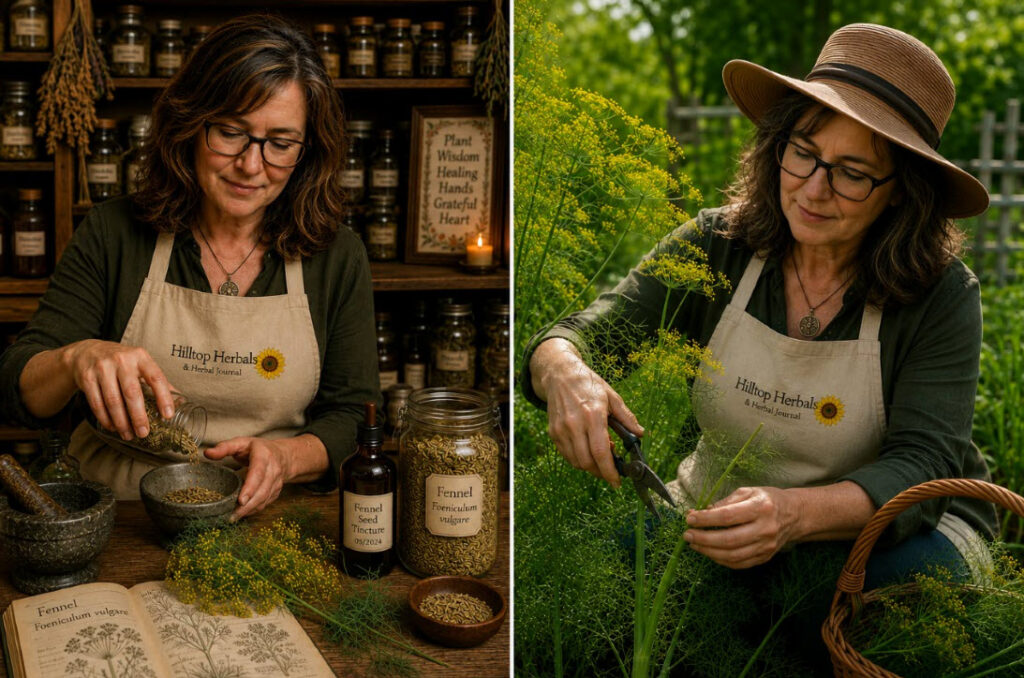
Image by Herbal Journal & OpenAI
Few herbs manage to be equally at home in the kitchen, the garden, and the apothecary, but fennel is one of them. With its feathery foliage, bright yellow flowers, crisp edible bulb, and sweet licorice-like aroma, fennel has earned a place in herbal traditions around the world. While many people know it as a culinary ingredient, herbalists have long valued fennel for its ability to support digestion, calm gas and bloating, ease occasional cramping, and even support nursing mothers.
For those of us who work with herbs regularly, fennel often becomes one of the first plants we reach for when digestive discomfort strikes. It is gentle, versatile, and generally well tolerated, making it a wonderful herb to keep on hand.
Getting to Know Fennel
Fennel (Foeniculum vulgare) is a member of the carrot family, making it a relative of parsley, dill, celery, and carrots. Native to the Mediterranean region, it has spread throughout much of the world and is now cultivated in gardens and farms across many climates.
The plant is easy to recognize. Its soft, feathery leaves resemble dill, while its clusters of yellow flowers eventually mature into the aromatic seeds that herbalists commonly use. Some varieties also produce the familiar white bulb found in grocery stores.
One of fennel’s most distinctive characteristics is its sweet scent. The aroma comes primarily from a compound called anethole, which is also responsible for the familiar flavor found in licorice and anise.
Which Parts of Fennel Are Used?
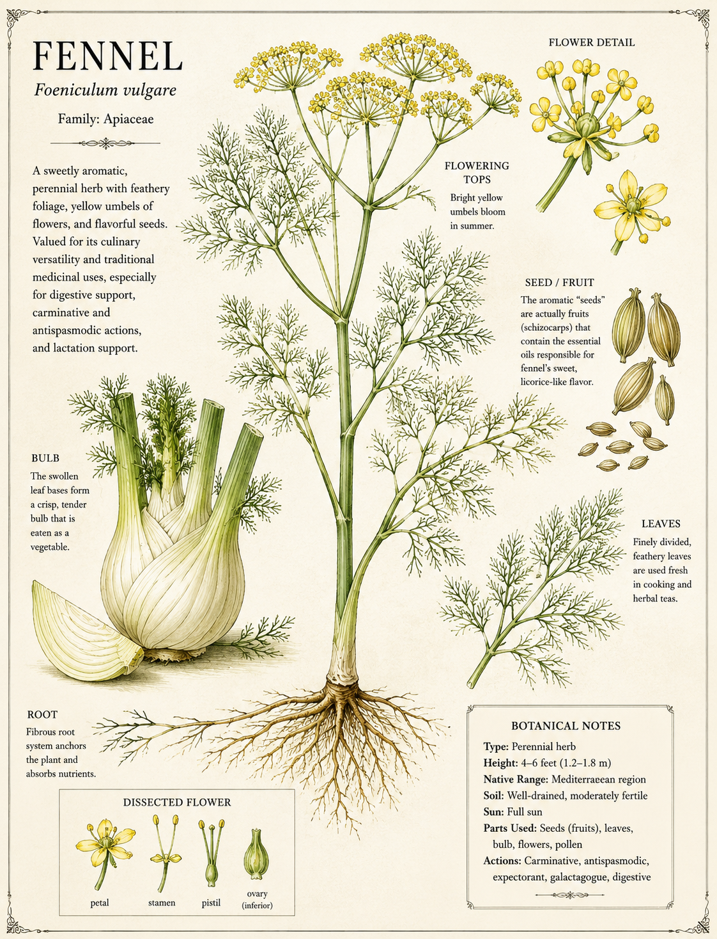
Courtesy of Herbal Journal & OpenAI
Download the Fennel Botanical Study
One of the reasons fennel is so useful is that nearly every part of the plant can be utilized.
The seeds are the most commonly used medicinal portion. These aromatic seeds are frequently brewed into teas, incorporated into tinctures, or simply chewed after meals to freshen the breath and support digestion.
The feathery leaves are often added to salads, soups, fish dishes, and herbal teas. While milder than the seeds, they contain many of the same aromatic compounds.
The bulb is primarily used as a vegetable. Its crisp texture and subtle sweetness make it delicious roasted, sautéed, or eaten raw in salads. Although it is generally viewed as a food rather than a medicine, it still offers gentle digestive support.
Even the flowers and pollen have culinary uses. Fennel pollen is sometimes called “the spice of angels” and is prized for its concentrated flavor.
Traditional Uses Throughout History
Fennel has a remarkably long history of use. Ancient Greek and Roman cultures valued it as both a food and a medicinal herb. Throughout Europe, fennel was often grown near homes and monasteries, where it was used for digestive complaints and respiratory support.
Traditional herbal systems have used fennel for a variety of concerns, including digestive upset, gas, bloating, coughs, menstrual discomfort, appetite support, and lactation. While modern herbalists may describe these actions differently, many of these traditional applications remain in use today.
Fennel’s Greatest Strength: Digestive Support
If fennel has a specialty, digestion is certainly it.
Fennel is classified as a carminative herb, meaning it helps reduce gas and bloating within the digestive tract. It is also considered mildly antispasmodic, helping to relax smooth muscle tissue and ease occasional cramping.
Many cultures traditionally serve fennel seeds after meals for exactly this reason. A small handful of seeds chewed after eating can leave the mouth feeling fresh while also encouraging comfortable digestion.
For individuals who experience occasional bloating, heaviness after meals, or digestive sluggishness, fennel tea is often one of the gentlest remedies available.
A simple fennel tea can be made by lightly crushing one teaspoon of fennel seeds and steeping them in a cup of hot water for ten to fifteen minutes. The resulting tea is pleasantly sweet and soothing.
Fennel and GERD
Many people with acid reflux or GERD find fennel comforting, particularly after meals. By helping reduce gas and digestive pressure, fennel may indirectly decrease some of the discomfort associated with reflux.
However, responses can vary from person to person. While many individuals tolerate fennel very well, some may find that stronger preparations aggravate reflux symptoms. As with many herbs, the best approach is to start gently and observe your own response.
Fennel and Lactation
Fennel has traditionally been used as a galactagogue, a substance believed to support milk production in nursing mothers. It remains a common ingredient in many commercial nursing teas.
Although modern research has produced mixed results, fennel continues to enjoy a long-standing reputation in postpartum herbal traditions. Moderate use as a tea is generally preferred over highly concentrated preparations.
Safety, Contraindications, and Cautions
As a culinary herb and vegetable, fennel is considered very safe for most people. Medicinal use, however, deserves a few additional considerations.
Because fennel contains compounds that may exhibit mild estrogen-like activity, individuals with hormone-sensitive conditions should consult a qualified healthcare practitioner before using large amounts medicinally. This includes those with certain estrogen-sensitive cancers, endometriosis, or uterine fibroids.
Pregnant individuals can generally enjoy fennel as a food, but concentrated medicinal doses are best approached cautiously and under professional guidance.
People with allergies to members of the carrot family may occasionally experience reactions to fennel as well. Since fennel is related to celery, carrots, parsley, dill, and coriander, cross-reactivity is possible.
While fennel has historically been used for infant colic, modern recommendations encourage careful dosing and consultation with a qualified healthcare provider before giving concentrated herbal preparations to infants.
One area that deserves particular attention is fennel essential oil. Essential oils are far more concentrated than teas or tinctures and should never be viewed as interchangeable. Excessive use of fennel essential oil has been associated with nausea, vomiting, and neurological symptoms. For most herbal purposes, the whole seed is the safer and more traditional choice.
Individuals taking hormone-related medications, including certain forms of hormone replacement therapy or hormonal contraceptives, should discuss medicinal fennel use with their healthcare provider.
Fennel Versus Anise
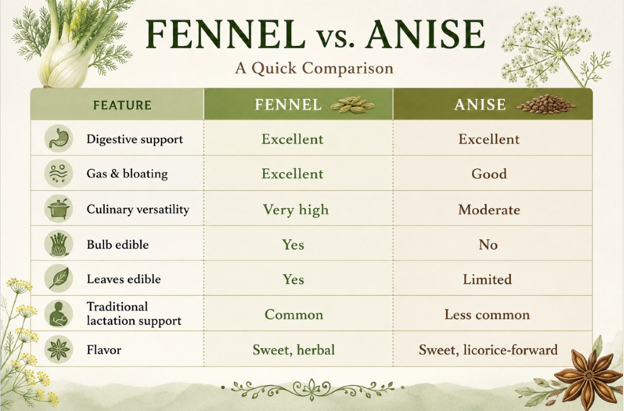 Fennel and anise are often confused because both possess a sweet licorice-like flavor. While they share some similarities, they are distinct plants with unique characteristics.
Anise (Pimpinella anisum) is generally grown for its seeds, which have a stronger, sweeter licorice flavor. It is commonly used in baking, confectionery, and liqueurs.
Fennel, on the other hand, offers much more versatility. In addition to the seeds, the leaves, pollen, flowers, and bulbs are all useful. Its flavor is slightly greener and more herbaceous than anise, making it adaptable to both savory and sweet dishes.
From an herbal perspective, both plants support digestion and can help reduce gas and bloating. However, fennel tends to be the herb most frequently chosen for digestive formulas because of its broader range of uses and generally gentler nature.
Final Thoughts
Fennel is one of those herbs that quietly earns its place in the apothecary. It may not receive the same attention as some of the more dramatic medicinal plants, but its gentle effectiveness has kept it in herbal traditions for centuries.
Whether enjoyed as a vegetable, brewed into a tea, or blended into digestive formulas, fennel offers a simple and approachable way to support digestive comfort. For many herbalists, it remains one of the most dependable herbs to keep close at hand—equally useful in the spice cabinet and the medicine chest.
References
American Botanical Council. Herbal Medicine: Expanded Commission E Monographs.
Hoffmann, D. (2003). Medical Herbalism: The Science and Practice of Herbal Medicine.
Mills, S., & Bone, K. (2013). Principles and Practice of Phytotherapy.
European Medicines Agency. Assessment Report on Foeniculum vulgare.
National Center for Complementary and Integrative Health (NCCIH).

Kathy is an herbalist/naturopathy practitioner who is constantly researching to expand her knowledge. She came to herbalism after her migraine medicine was suddenly removed from the market and she had to find something new. After discovering the magic of herbs she’s never looked back. She is accredited by the International Practitioners of Holistic Medicine (IPHM) View her courses of study.