
You Don’t Need a Miracle Cleanse
Supporting Your Body’s Natural Detoxification with Food and Herbs
Images by Herbal Journal & OpenAI
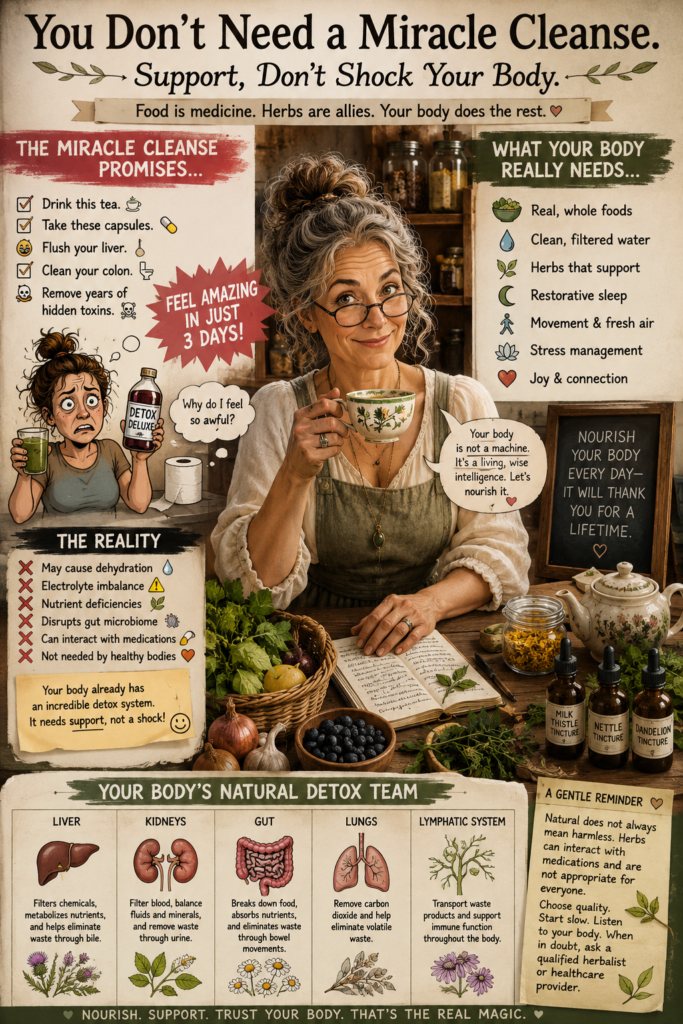
Every few months, another “miracle cleanse” appears…
🫖 Drink this tea.
💊 Take these capsules.
🧹 Flush your liver.
🚽 Clean your colon.
☣️ Remove years of hidden toxins.
The promises are always impressive…
✨ Reduced inflammation.
⚡ More energy.
🌿 Better digestion.
🌸 Clearer skin.
⚖️ Rapid weight loss.
🛡️ A stronger immune system.
🎉 Feel 20 years younger!
If it sounds too good to be true…
🤔 …it usually is.
That doesn’t mean your body doesn’t need support—it absolutely does.
But true wellness doesn’t come from starving yourself for three days…
🥤 Living on juice.
🚫 Eliminating entire food groups.
💸 Spending hundreds of dollars on “detox kits.”
😣 Hoping diarrhea is a sign that it’s working.
Instead, health comes from nourishing the remarkable systems your body already uses every single day.
❤️ Your liver.
💧 Your kidneys.
🌬️ Your lungs.
🥗 Your digestive tract.
🌱 And the foods and herbs that help them do what they were beautifully designed to do.
Your Body Already Has a Detox System
Our bodies are beautifully designed.
Every minute of every day, several organs work together to process and eliminate waste products:
- The liver transforms compounds into forms the body can safely remove.
- The kidneys filter waste from the blood.
- The digestive tract eliminates substances through the stool.
- The lungs remove carbon dioxide.
- The lymphatic system helps transport cellular waste while supporting immune function.
These systems don’t need to be “turned on.”
They need to be supported.
Why Do People Feel Better After a Cleanse?
Here’s the interesting part.
Many people genuinely do feel better after completing a cleanse.
But was it because toxins were removed?
Probably not.
Most cleanses eliminate alcohol, processed foods, excessive sugar, fast food, and overeating for several days.
Simply replacing those foods with vegetables, fruits, adequate water, and home-cooked meals can improve how someone feels surprisingly quickly.
In other words…
It may not have been the cleanse.
It may have been the healthy habits.
Inflammation Isn’t the Enemy
You’ll often hear products claim they “eliminate inflammation.”
Inflammation itself isn’t bad.
It’s actually one of the body’s most important healing responses.
When you cut your finger, catch a virus, or sprain your ankle, inflammation helps repair the damage.
The concern is chronic inflammation—the kind that persists because of ongoing stressors such as poor diet, smoking, inadequate sleep, unmanaged stress, obesity, environmental exposures, chronic illness, or autoimmune conditions.
Rather than trying to “flush inflammation away,” we should ask:
Why is the body inflamed in the first place?
Herbalists have asked that question for centuries.
One of my favorite sayings is:
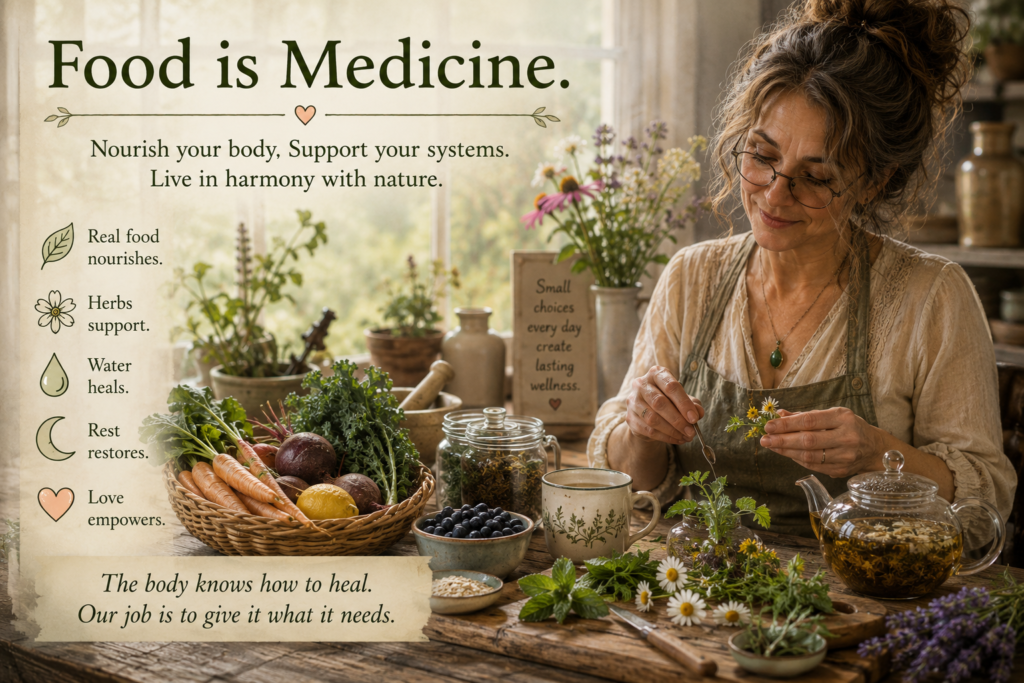
Before you reach for the medicine cabinet, look at your dinner plate.
Food provides thousands of naturally occurring compounds that help support healthy inflammatory responses.
A whole-food diet rich in colorful vegetables, berries, herbs, quality protein, legumes (when tolerated), healthy fats, and minimally processed foods gives the body the raw materials it needs to repair itself.
Sometimes the most powerful “cleanse” is simply eating real food for a month.
Gentle Herbal Allies
Herbs don’t “scrub toxins” from the body.
Instead, many gently support the organs and systems already doing the work.
Dandelion (Taraxacum officinale)
A traditional liver and digestive herb that also supports healthy bile flow.
Wonderful as a roasted root beverage or tea.
Nettle (Urtica dioica)
Rich in minerals and traditionally used as a nourishing spring tonic.
Excellent for supporting overall vitality.
Burdock Root (Arctium lappa)
Traditionally considered an alterative herb that supports healthy elimination through normal metabolic processes.
Calendula (Calendula officinalis)
Known for supporting healthy lymphatic movement and gentle digestive wellness.
Ginger (Zingiber officinale)
Supports digestion, circulation, and healthy inflammatory responses.
(If you have reflux or GERD, use ginger cautiously, as it can aggravate symptoms in some people.)
Turmeric (Curcuma longa)
Perhaps the best-known herb for supporting healthy inflammatory balance.
Its active constituent, curcumin, has been widely studied, although absorption is improved when consumed with fat and black pepper. Black pepper, however, isn’t appropriate for everyone and can interact with certain medications.
Herbal Teas for Everyday Wellness
A gentle daily tea can become part of a healthy routine.
One of my favorite combinations is:
- Nettle leaf
- Calendula flowers
- Lemon balm (Melissa officinalis)
- A small amount of ginger (optional)
Steep covered for 10–15 minutes.
Drink one or two cups daily as part of a balanced lifestyle—not because your body is “full of toxins,” but because nourishing herbs can become part of everyday wellness.
Herbal Tinctures
For those who prefer tinctures, gentle options may include:
- Nettle
- Burdock
- Calendula
- Dandelion root
- Milk thistle (Silybum marianum) for liver support
Remember that tinctures are concentrated herbal preparations—not magic potions. More is not always better.
When in doubt, consult a qualified herbalist or healthcare provider, particularly if you are pregnant, nursing, have chronic medical conditions, or take prescription medications.
Lifestyle Is the Best Detox Program
No supplement can replace the basics.
Support your body’s natural detoxification by:
- Eating mostly whole, minimally processed foods.
- Drinking adequate water.
- Getting regular movement.
- Sleeping seven to nine hours when possible.
- Managing stress.
- Limiting alcohol.
- Avoiding tobacco.
- Maintaining regular bowel habits with adequate dietary fiber.
These habits consistently have far more evidence behind them than expensive detox kits.
Herbal Safety Reminder
Natural does not always mean harmless.
Many herbs interact with prescription medications or are inappropriate during pregnancy, breastfeeding, liver disease, kidney disease, or before surgery.
Always choose quality herbs from reputable suppliers, and don’t assume that more herbs will produce better results.
Final Thoughts
As herbalists, one of our most important jobs isn’t selling miracle solutions.
It’s helping people understand and trust their own bodies.
The liver isn’t lazy.
The kidneys aren’t waiting for permission.
Your body has been caring for you every moment of your life.
Our role is to nourish those systems—with wholesome food, gentle herbs, clean water, good sleep, movement, and patience.
Sometimes the best cleanse isn’t a cleanse at all.
It’s simply returning to the habits that allow the body to do what it was wonderfully designed to do.
❌ Shock your body.
✅ Support your body.
❌ Fight your body.
✅ Work with your body.
❌ Quick fixes.
✅ Daily habits.
🌿 Food is medicine. Herbs are allies. Your body does the rest.
Yours in wellness! Kathy – the Hilltop Herb Woman
References
- National Center for Complementary and Integrative Health. (2024). Detoxes and cleanses: What you need to know.
- National Institute of Diabetes and Digestive and Kidney Diseases. Your kidneys & how they work.
- National Institute of Environmental Health Sciences. Inflammation.
- Mayo Clinic. Colon cleansing: Is it helpful or harmful?
- Mayo Clinic. Candida cleanse: What does it do?
- National Health Service (NHS). Foods that help your digestion.
- Centers for Disease Control and Prevention. About Chronic Diseases.

Kathy is an herbalist/naturopathy practitioner who is constantly researching to expand her knowledge. She came to herbalism after her migraine medicine was suddenly removed from the market and she had to find something new. After discovering the magic of herbs she’s never looked back. She is accredited by the International Practitioners of Holistic Medicine (IPHM) View her courses of study.