
From Garden to Apothecary: Feverfew
Harvesting, Drying, Encapsulating & Safely Using One of Herbalism’s Most Recognized Migraine Herbs
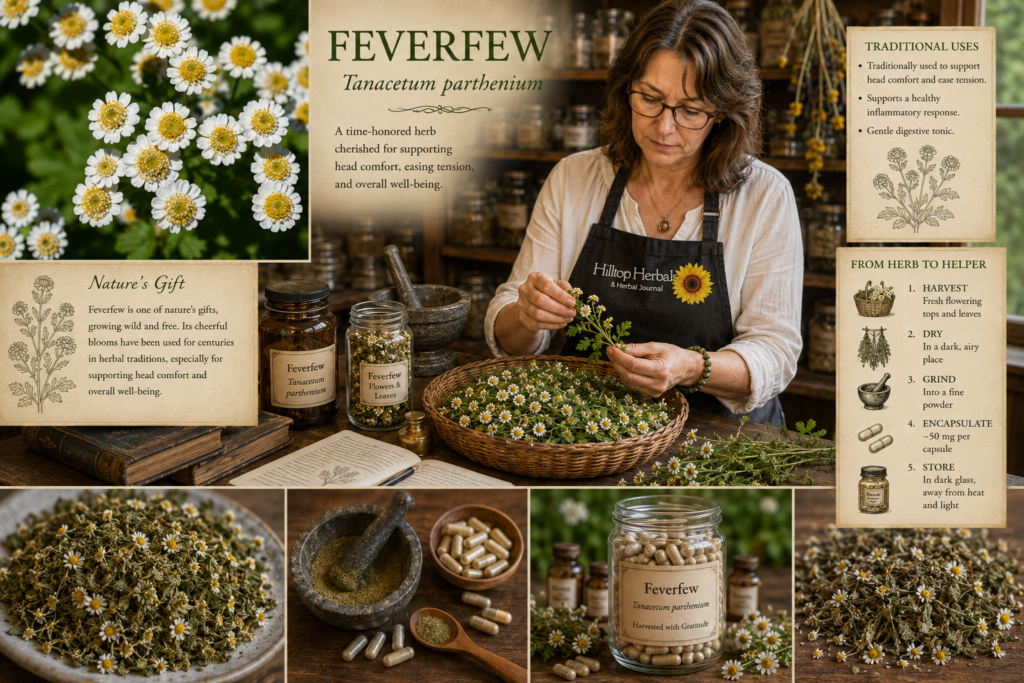
Image by Hilltop Herbals & OpenAI
Some herbs seem to invite you into the garden.
Feverfew (Tanacetum parthenium) is one of those plants.
With its cheerful white blossoms and sunny yellow centers, it brings beauty to the landscape while quietly earning a place in the herbal apothecary. For centuries, herbalists have valued feverfew for its traditional role in supporting head comfort and overall wellness.
My own feverfew wasn’t something I intentionally planted. It simply appeared one year and faithfully returned season after season—a true gift from nature. Unfortunately, this year the local deer decided it looked just as appealing as I did! Thankfully, I had already harvested and preserved a generous supply from previous seasons.
Whether you grow feverfew in a dedicated herb garden or are fortunate enough to have it naturalize on your property, preserving it yourself is a rewarding way to keep this remarkable herb available throughout the year.
Meet Feverfew
Botanical Name: Tanacetum parthenium
Family: Asteraceae (Daisy Family)
Life Cycle: Perennial
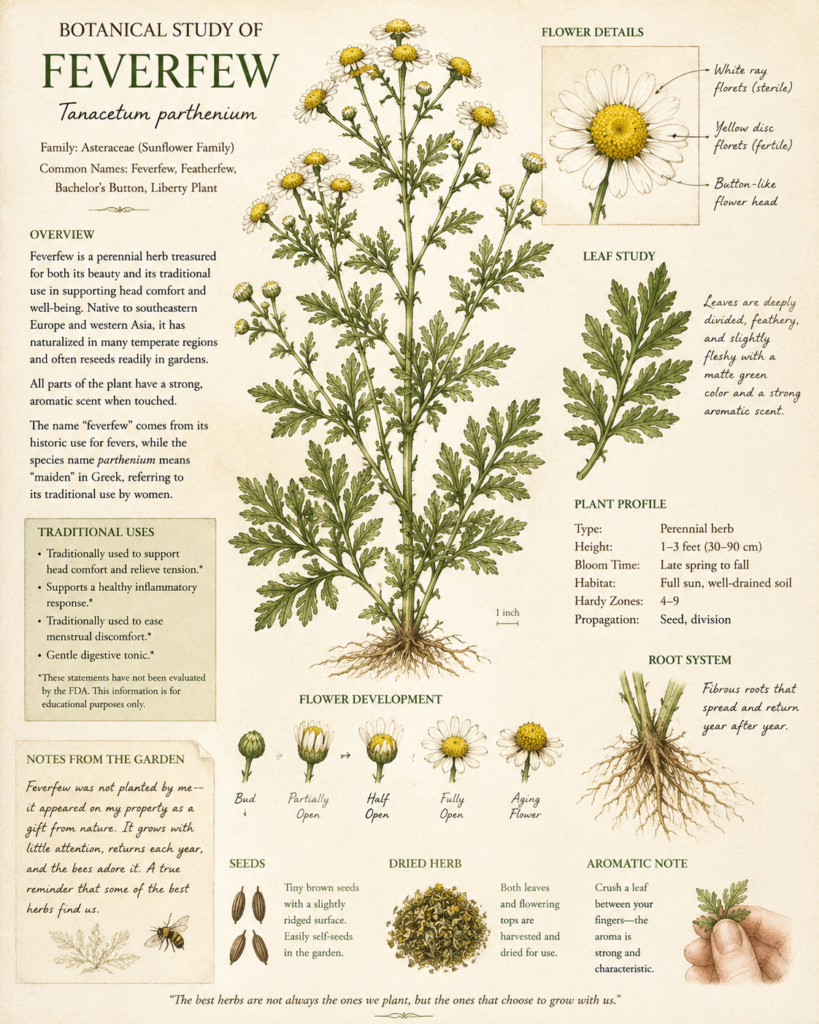
Native to southeastern Europe, feverfew has become naturalized throughout much of North America. It forms bushy clumps of deeply divided green leaves topped with clusters of cheerful daisy-like flowers from late spring through summer.
One of its most distinctive characteristics is its aroma. Crush a leaf between your fingers, and you’ll notice a strong, bitter, slightly camphor-like scent that immediately distinguishes it from chamomile. While the flowers may look similar at first glance, the fragrance leaves little doubt.
When to Harvest
The best time to harvest feverfew is just before or during peak bloom.
Choose a dry morning after the dew has evaporated but before the afternoon heat arrives. Avoid harvesting after rain or when the foliage is damp, as excess moisture increases drying time and raises the risk of mold.
Always harvest healthy plants free of insect damage or disease.
Which Parts of the Plant Should You Harvest?
Unlike chamomile, which is harvested primarily for its flowers, feverfew is traditionally harvested using both the leaves and flowering tops. Some herbalists also include the tender upper stems.
The leaves contain many of the constituents traditionally associated with feverfew, making them just as valuable as the flowers.
Feverfew or Chamomile?
Because both plants belong to the daisy family, they’re often confused during harvest.
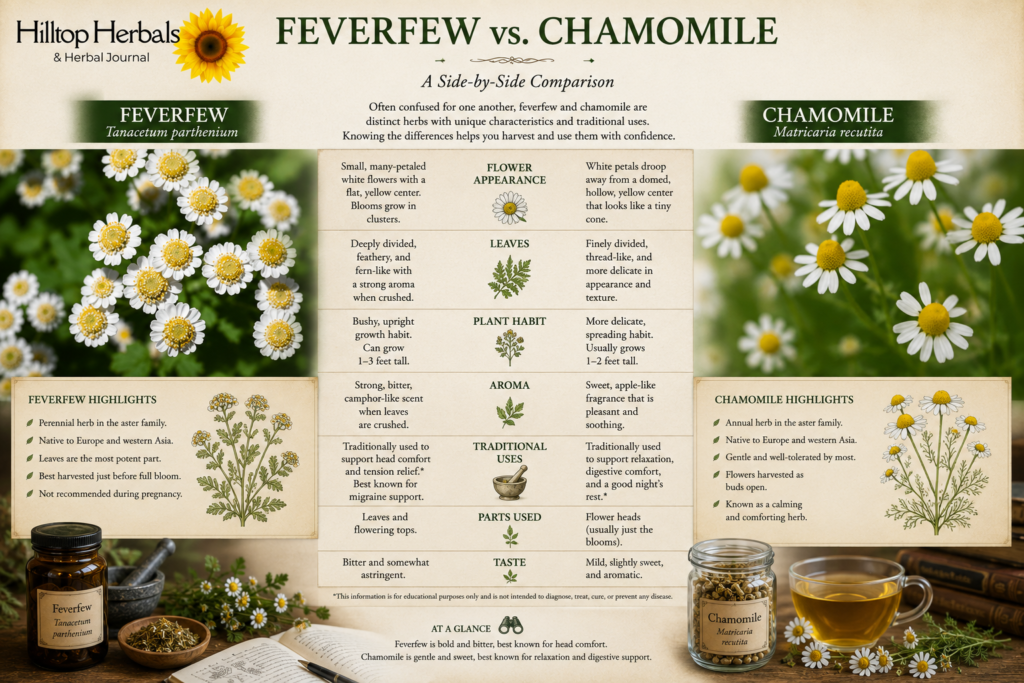
One of the quickest ways to tell them apart is by scent.
Feverfew has a strong, bitter, medicinal aroma with slightly camphor-like notes.
Chamomile has a sweet, apple-like fragrance that most people find immediately recognizable.
The foliage also differs considerably. Feverfew leaves are broader and deeply divided, while chamomile leaves are much finer and thread-like.
Whenever harvesting medicinal herbs, positive identification should always come before collection.
Drying Your Harvest
Drying feverfew is simple but requires patience.
Spread the harvested herb in a single layer on drying screens or trays where air can circulate freely. Alternatively, you can hang your harvest by the stem in small bunches or individually from a drying rack.
Ideal drying conditions include temperatures between 95°F and 105°F (35–40°C), low humidity, good airflow, and protection from direct sunlight. Where I hang my plants, I have a small fan blowing at low speed constantly.
The herb is fully dried when the stems snap cleanly, the leaves crumble easily, and the flowers retain much of their natural color.
Proper drying helps preserve both aroma and quality.
Grinding Feverfew
Once completely dry, remove any coarse stems.
Grind the leaves and flowers into a fine powder approximately the consistency of all-purpose flour. The powder should feel soft between your fingers, with only the occasional tiny fleck of leaf remaining. Large stem pieces should be removed before encapsulating.
A dedicated herb grinder, coffee grinder, or spice mill works well for small batches.
Rather than grinding continuously, pulse the grinder several times. This minimizes heat buildup and helps preserve the herb’s aromatic compounds.
If you’d like an especially consistent powder, sift the finished herb through a fine kitchen sieve before filling capsules.
Choosing Capsule Sizes
One of the questions I’m asked most often is which capsule size works best for homemade herbal preparations.
These capacities are approximate for moderately packed powdered feverfew.
Size 000: approximately 800–1,000 mg
Size 00: approximately 550–750 mg
Size 0: approximately 400–500 mg
Size 1: approximately 300–400 mg
Size 2: approximately 200–300 mg
Size 3: approximately 150–200 mg
Size 4: approximately 100–150 mg
Size 5: approximately 60–100 mg
For most home herbalists, I recommend Size 0 capsules. They hold a practical amount of herb while remaining comfortable for most adults to swallow.
If you’re using a capsule-filling machine and don’t mind a slightly larger capsule, Size 00 is another excellent choice. Download the Capsule Sizes Quick Reference
What About the Common 50 mg Recommendation?
If you’ve researched feverfew for migraine support, you’ve probably encountered recommendations of approximately 50 mg daily.
It’s important to understand that many published clinical studies evaluated standardized feverfew extracts, not homemade whole-herb capsules.
Standardized extracts are manufactured to contain a consistent level of key constituents, while whole-herb preparations naturally vary depending on growing conditions, harvest timing, drying methods, and the individual plant itself.
For that reason, capsule size alone should never be considered an exact measurement of active compounds.
Storage
Store dried feverfew or finished capsules in airtight amber or other dark-colored glass jars away from heat, humidity, and direct sunlight.
Every jar should be labeled with:
• Herb name
• Botanical name
• Harvest date
• Preparation date
Properly stored, dried feverfew generally maintains its best quality for about one year.
Safety & Contraindications
Although feverfew has been used traditionally for centuries, it is not appropriate for everyone.
Avoid feverfew if you are pregnant or trying to become pregnant, as it has traditionally been considered a uterine stimulant.
People with allergies to members of the Asteraceae family—including ragweed, chrysanthemums, daisies, and marigolds—may also experience allergic reactions to feverfew.
If you are scheduled for surgery, discontinue feverfew at least two weeks beforehand because it may affect platelet function and increase the risk of bleeding.
Use caution if you take blood-thinning medications, antiplatelet medications, aspirin, or NSAIDs. Individuals with bleeding disorders should consult their healthcare provider before using feverfew.
The safety of feverfew during breastfeeding has not been well established, and it should not be given to children without guidance from a qualified healthcare professional.
Some people experience mouth irritation or ulcers when chewing fresh feverfew leaves. Others may notice mild digestive upset or allergic skin reactions. For this reason, many herbalists prefer capsules, teas, or tinctures rather than consuming fresh leaves.
If you’ve been taking feverfew daily for an extended period, avoid stopping abruptly. Sudden discontinuation has occasionally been associated with rebound headaches, muscle stiffness, anxiety, or sleep disturbances. A gradual reduction is generally recommended.
Disclaimer: This article is provided for educational purposes only and is not intended to diagnose, treat, cure, or prevent any disease. Always consult your healthcare provider before beginning any herbal regimen, especially if you are pregnant, nursing, taking prescription medications, or have an underlying medical condition.
Final Thoughts
One of the things I love most about herbalism is the connection it creates between the garden and the apothecary.
Harvesting your own feverfew, carefully drying it, and preparing it by hand reminds us that herbal medicine begins long before the capsule is filled. It begins with observation, patience, respect for the plant, and gratitude for what nature provides.
Whether your feverfew grows from carefully planted seeds or appears unexpectedly as one of nature’s gifts, taking the time to preserve it yourself is one more step toward building a truly personal herbal practice.
Enjoy! Kathy, the Hilltop Herb Woman
References
American Herbal Pharmacopoeia. Feverfew Monograph.
European Scientific Cooperative on Phytotherapy (ESCOP). ESCOP Monographs: Tanacetum parthenium.
Hoffmann, David. Medical Herbalism: The Science and Practice of Herbal Medicine.
Mills, Simon & Bone, Kerry. Principles and Practice of Phytotherapy.
World Health Organization. WHO Monographs on Selected Medicinal Plants.

Kathy is an herbalist/naturopathy practitioner who is constantly researching to expand her knowledge. She came to herbalism after her migraine medicine was suddenly removed from the market and she had to find something new. After discovering the magic of herbs she’s never looked back. She is accredited by the International Practitioners of Holistic Medicine (IPHM) View her courses of study.