
Herbal & Lifestyle Allies for Recovery
It’s almost the year-end! Time for those New Year’s Resolutions, and if yours includes quitting alcohol, here are some herbal and lifestyle tips that could help you succeed.
Herbal Allies for Recovery
These herbs are traditionally used to ease withdrawal symptoms, support liver health, and calm the nervous system:
| Herb | Key Benefit | Best Form |
|---|---|---|
| Milk Thistle | Protects and regenerates liver cells | Capsules, tincture, or tea |
| Kudzu Root | May reduce alcohol cravings and binge urges | Standardized extract |
| Valerian Root | Promotes sleep and reduces anxiety | Capsules or bedtime tea |
| Passionflower | Calms nervous tension, supports GABA activity | Tea or tincture |
| Chamomile | Gentle sedative, eases irritability and insomnia | Tea |
| Lemon Balm | Relieves anxiety and mild depression | Tea or capsules |
| Skullcap | Traditional nervine for stress relief | Tincture |
| Ashwagandha | An adaptogen that balances stress hormones | Powder or capsules |
Important: Always consult a healthcare provider before starting herbs, especially if you take medications, since interactions are possible. Cautions: Lemon Balm and ashwagandha in high doses can interrupt thyroid function, which can be detrimental for patients with thyroid disease. Kudzu and ashwagandha can interact with medications or hormone-sensitive conditions. Those patients who have estrogen-positive cancer should avoid kudzu and ashwagandha completely. Skullcap, Valerian, and Passionflower are sedative; do not combine with any other sedative, and do not drive after using these herbs. Best practices: Start with the minimum dosages possible.
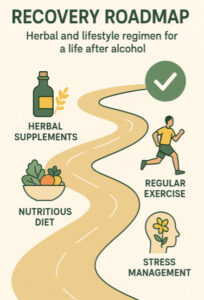
Image by Kathy McCabe and Copilot
Lifestyle Foundations
Recovery is not just about removing alcohol—it’s about building a new rhythm of health:
- Nutrition
- Eat antioxidant-rich foods (berries, leafy greens, nuts) to repair oxidative stress.
- Prioritize lean proteins and whole grains to stabilize blood sugar.
- Avoid processed sugar and refined carbs, which can trigger cravings and inflammation.
- Hydration
- Aim for 2–3 liters of water daily to flush toxins and restore skin and liver health.
- Movement
- Gentle exercise (walking, yoga, swimming) reduces cravings and boosts mood.
- Strength training supports metabolic recovery and bone health.
- Sleep Hygiene
- Keep a consistent bedtime routine.
- Herbs like valerian or chamomile can help restore REM sleep disrupted by alcohol.
- Mindfulness & Stress Management
- Meditation and breathwork reduce relapse risk by calming the nervous system.
- Journaling or creative outlets (art, music) help process emotions.
- Social Support
- Join recovery groups or therapy to build accountability and resilience.
- Replace alcohol-centered socializing with new rituals (tea ceremonies, nature walks).
⚠️ Risks & Considerations
- Withdrawal Safety: Quitting alcohol abruptly can be dangerous for heavy drinkers (risk of seizures, delirium tremens). Medical supervision is critical in the first 72 hours.
- Post-Acute Withdrawal Syndrome (PAWS): Mood swings, fatigue, and insomnia may persist for weeks or months. Herbs and lifestyle support can help, but professional guidance is essential.
- Relapse Triggers: Stress, social pressure, and fatigue are common relapse points. Have a plan—support contacts, herbal teas, or exercise—to ride out cravings.
A life after alcohol thrives on liver-supportive herbs (milk thistle, kudzu), calming nervines (valerian, passionflower, chamomile), and adaptogens (ashwagandha), paired with hydration, nutrient-dense foods, movement, sleep hygiene, mindfulness, and strong social support. This holistic regimen helps the body heal, stabilizes mood, and builds resilience for long-term sobriety.
Here’s a glycerite tincture recipe designed to support the nervous system and reduce alcohol cravings gently. It uses alcohol-free extraction and herbs traditionally used for calming, grounding, and craving modulation.
Tincture for Cravings (Non-alcoholic)
Ingredients
- Dried Kudzu Root – 2 tbsp (craving modulation)
- Dried Passionflower – 1 tbsp (nervine, anxiety relief)
- Dried Lemon Balm – 1 tbsp (mood support)
- Dried Skullcap – 1 tbsp (nervous system tonic)
- Food-grade vegetable glycerin – enough to fill jar
- Distilled water – optional, up to 20% of total liquid
Equipment
- Pint-size glass jar with lid
- Cheesecloth or fine strainer
- Amber dropper bottles for storage
Instructions
- Prepare the herbs: Lightly crush or chop dried herbs to increase surface area.
- Fill the jar: Add herbs to fill 1/3 to 1/2 of the jar (don’t pack tightly).
- Add glycerin: Fill the rest of the jar with glycerin, leaving 1 inch of headspace. Optionally, mix 80% glycerin with 20% distilled water for better extraction.
- Seal and shake: Cap tightly and shake well.
- Infuse: Let sit for 4–6 weeks in a cool, dark place. Shake every few days.
- Strain and bottle: Strain through cheesecloth, pressing out all liquid. Transfer to amber bottles.
️ Suggested Use
- Standard: 1–2 dropperfuls (approx. 30–60 drops) up to 3x daily.
- Craving moments: Take 1 dropperful when cravings arise, paired with breathwork or herbal tea.
Here is a great blog about making herbal glycerites: Glycerites: How to Use Vegetable Glycerine to Extract Herbal Constituents
For those who don’t have access to all these dried herbs or who want support more immediately, you can recreate this using non-alcoholic extracts:
Ingredients
- Kudzu Root Glycerite – 1 part (craving modulation)
- Skullcap Glycerite – 1 part (nervous system support)
- Passionflower Glycerite – 1 part (anxiety relief)
- Lemon Balm Glycerite – 1 part (mood elevation)
Instructions
- Combine extracts in a clean amber bottle using equal parts of each glycerite. For example:
- 1 oz Kudzu
- 1 oz Skullcap
- 1 oz Passionflower
- 1 oz Lemon Balm
- Shake gently to blend.
- Label clearly with ingredients, suggested use, and date.
- Use the same suggested use as the remedy above.
Benefits of Using Purchased Glycerites
- Consistency: Standardized potency and extraction.
- Convenience: No need for 4–6 week infusion.
- Alcohol-free: Safe for sensitive individuals or those in recovery.
Why This Blend Works
- Kudzu root has shown promise in reducing alcohol intake in clinical studies.
- Passionflower and skullcap calm the nervous system and reduce anxiety-driven cravings.
- Lemon balm lifts mood and supports emotional resilience.
Here’s to starting the new year with health and wellness!
Happy Holidays, Kathy (Hilltop Herb Woman)
If you purchase from a link on my site, I may receive a small compensation that will help me bring herbal tips and recipes to you!

Kathy is an herbalist/naturopathy practitioner who is constantly researching to expand her knowledge. She came to herbalism after her migraine medicine was suddenly removed from the market and she had to find something new. After discovering the magic of herbs she’s never looked back. She is accredited by the International Practitioners of Holistic Medicine (IPHM) View her courses of study.