
Forsythia viridissima: The Overlooked Spring Medicine Hiding in Plain Sight
Forsythia viridissima: The Overlooked Spring Medicine Hiding in Plain Sight
When most people think of forsythia, they picture bright yellow hedges announcing the arrival of spring. But behind those early blossoms lies a surprisingly potent medicinal shrub — especially Forsythia viridissima, a species native to China and Korea and now naturalized across the United States.
While F. suspensa gets most of the attention in traditional East Asian medicine, modern research is revealing that Forsythia viridissima carries its own unique medicinal profile, rich in lignans and anti‑inflammatory compounds that make it a valuable herb for seasonal wellness, skin support, and inflammatory conditions.
Let’s explore what makes this species special — and how you can safely work with it at home.
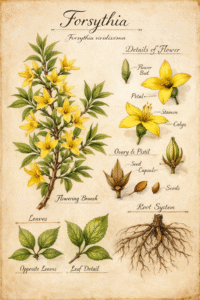
Botanical Snapshot
- Latin name: Forsythia viridissima Lindl.
- Family: Oleaceae (olive family)
- Parts used: Primarily the fruit, though leaves and roots have documented activity
- Energetics: Cooling, clearing, dispersing
- Traditional actions: Clears “heat,” supports the immune response, soothes inflamed tissues
Medicinal Benefits of Forsythia viridissima
1. Potent Anti‑Inflammatory Activity
Modern studies show that F. viridissima contains dimeric dibenzylbutyrolactone lignans, which strongly inhibit inflammatory signaling in immune cells. These compounds reduce:
- Nitric oxide (NO) overproduction
- iNOS expression
- Downstream inflammatory cascades
This makes the plant especially useful for:
- Swollen lymph nodes
- Sore throats
- Hot, irritated skin
- Systemic inflammatory states
2. Antioxidant Protection
The lignans and phenolic compounds in F. viridissima help neutralize oxidative stress, supporting:
- Tissue repair
- Healthy aging
- Immune resilience
3. Traditional Antimicrobial Use
While most antimicrobial research focuses on F. suspensa, F. viridissima has been used interchangeably in traditional formulas for:
- Early‑stage colds
- Feverish conditions
- Skin eruptions
- “Toxic heat” patterns
Given the overlap in chemistry, it likely shares similar broad‑spectrum antimicrobial tendencies.
4. Clean Safety Profile
A 2020 toxicology study found that aqueous extracts of F. viridissima fruit showed:
- No acute toxicity in rats at 5000 mg/kg
- No mutagenicity in Ames tests
- No chromosomal damage in vitro or in vivo
This positions the plant as a relatively safe herb when used appropriately and short‑term.
Recipe: Forsythia Viridissima Spring Clearing Tea
This gentle, cooling tea is ideal for early‑spring immune support, warm‑inflamed skin patterns, or that “coming down with something” feeling.
Ingredients
- 1 tbsp dried Forsythia viridissima fruit (or 2 tbsp fresh)
- 1 tsp dried honeysuckle flowers (Lonicera japonica) — optional but traditional
- 1 tsp dried mint
- 12–16 oz hot water
Directions
- Add herbs to a heat‑safe jar or teapot.
- Pour hot water (just off the boil) over the herbs.
- Cover and steep 15–20 minutes.
- Strain and sip warm.
How to Use
- Drink 1–2 cups daily for 2–3 days during acute symptoms.
- For skin support, the cooled tea can be used as a wash on hot, irritated areas.
Notes
- This tea is cooling — avoid if you tend to run cold or depleted.
- Not for long‑term daily use.
- Always consult a practitioner if pregnant, nursing, or on medications.
Working With the Plant at Home
- Harvesting: Fruits are traditionally used when fully ripe; leaves can be gathered in spring.
- Drying: Spread in a single layer in a warm, airy space.
- Storage: Keep dried material in a sealed jar away from heat and light.
If you grow forsythia on your property, you may already have access to this medicine — just confirm species identification before harvesting.
References
- Anti‑inflammatory lignans:
Study identifying lignan glycosides and lignan dimers from F. viridissima roots and demonstrating strong NO‑inhibitory activity in LPS‑stimulated macrophages. - Phytochemical comparisons across Forsythia species:
Research noting arctiin‑type lignans as major constituents of F. viridissima and comparing profiles with F. suspensa. - Acute toxicity and genotoxicity:
Aqueous fruit extract (EFVF) tested in rats and mice, showing no toxicity or mutagenicity at high doses. - Traditional uses of Forsythiae Fructus:
Ethnobotanical sources describing the use of F. viridissima fruit interchangeably with F. suspensa in classical formulas for fever, sore throat, and skin eruptions.

Kathy is an herbalist/naturopathy practitioner who is constantly researching to expand her knowledge. She came to herbalism after her migraine medicine was suddenly removed from the market and she had to find something new. After discovering the magic of herbs she’s never looked back. She is accredited by the International Practitioners of Holistic Medicine (IPHM) View her courses of study.