
Why I Use AI as an Herbalist
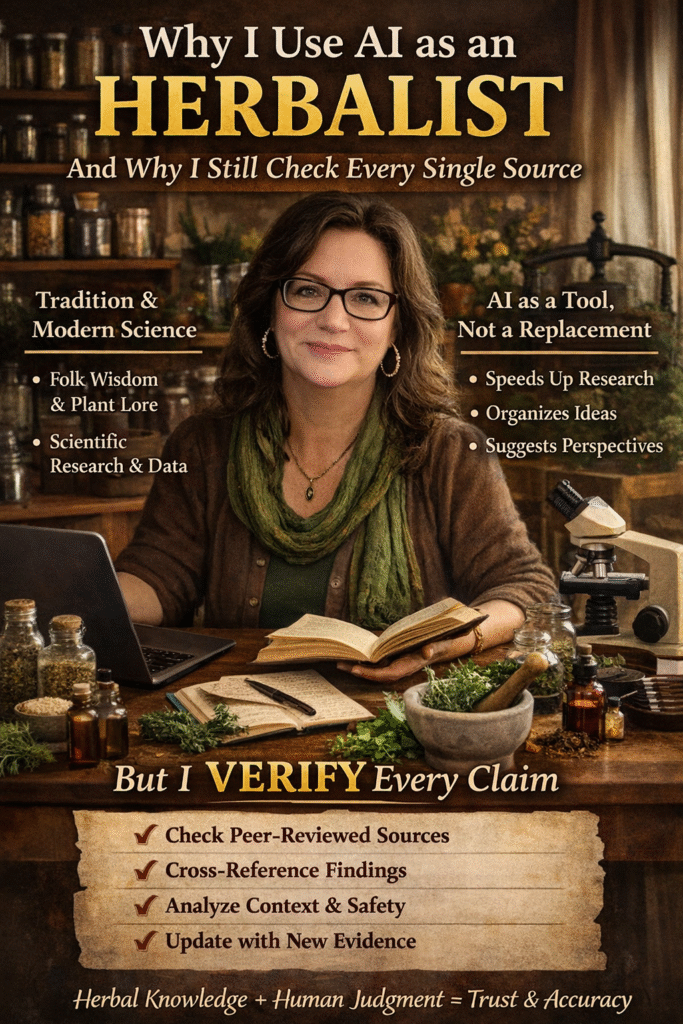
Image by Kathy McCabe and OpenAI
Why I Use AI as an Herbalist — And Why I Still Check Every Single Source
I know I’ve spoken about using AI in my herbal writing before, but since this is a hot topic, I thought that another article was applicable.
Herbalism lives at the crossroads of tradition and modern science. On one side, we have generations of lived experience, folk wisdom, and plant stories passed down through families and communities. On the other side, we have an overwhelming—and constantly growing—body of scientific research, clinical trials, case reports, and safety data.
Navigating both worlds is beautiful, but it’s also a lot.
That’s why I use AI as part of my research and writing process. Not as a replacement for my judgment, training, or intuition—but as a tool. And just like any tool in herbalism, from a mortar and pestle to a tincture press, it’s only as good as the hands and mind using it.
Let me take you behind the scenes of how I use AI responsibly, and why my training matters so much in that process.
The Sheer Volume of Information We’re All Swimming In
Today, herbalists are expected to keep up with:
- Thousands of research papers on individual herbs
- New studies are published every week on interactions, safety, and efficacy
- Traditional use records, ethnobotanical texts, and historical references
- Blogs, social media posts, and “wellness” content of wildly varying quality
If I relied only on manually searching through all of that, I’d spend far more time digging than teaching, writing, or working with people.
AI helps me:
- Surface relevant studies faster
- Organize ideas and structure articles
- Explore different perspectives or angles I might otherwise miss
But here’s the key: AI can suggest information. It cannot decide what is true, safe, or appropriate. That responsibility belongs to the trained herbalist using it.
Why “Interesting” Isn’t Enough
I care deeply about making herbal education engaging. I want you to read an article and feel:
- Curious
- Empowered
- Inspired to learn more
- Confident in what you’re reading
AI is incredibly good at helping shape content that flows well, feels readable, and connects ideas in creative ways. It can help me:
- Turn dense research into accessible language
- Find metaphors or analogies that make a concept click
- Structure an article so it’s easier to follow
But “interesting” is not the same as “accurate.”
A beautifully written article that misrepresents a study, exaggerates benefits, or glosses over safety concerns is worse than unhelpful—it can be harmful. So while I may use AI to help with phrasing or structure, the facts in my articles are never taken at face value from any AI output.
How I Double and Triple Check Sources
When I create an article involving herbal actions, safety, or research, here’s what actually happens:
- I identify the claims being made.
- I go back to primary and reputable sources: peer‑reviewed research, respected herbal texts, pharmacopoeias, materia medicas, clinical references, and especially my favorite authors. (I have hundreds of books, both physical and electronic, in my library!)
- I cross‑check multiple sources to look for patterns and consensus.
- I verify context, not just quotes: what was studied, what preparation was used, and whether the results are being overstated.
- I update information as new research emerges.
AI does not do this for me. I do this. AI may help me find or organize information, but the responsibility for accuracy, nuance, and safety is mine. I want my readers to trust my research.
Why My Herbal Training Matters — And Why AI Alone Is Never Enough
Long before I ever incorporated AI into my workflow, I invested deeply in formal herbal education. My training spans well over 1,200 hours of structured study, hands‑on medicine making, materia medica work, safety training, formulation practice, and ongoing continuing education. I’ve studied with respected herbalists and institutions such as The Herbal Academy and Cornell University, completed comprehensive programs, and immersed myself in both traditional frameworks and modern evidence‑based approaches.
This training isn’t just for a resume — it’s the foundation that allows me to evaluate information responsibly. Herbalism requires far more than memorizing plant uses. It demands:
- Understanding plant chemistry and how it changes across preparations
- Recognizing when a study is meaningful, flawed, or misinterpreted
- Knowing traditional energetics and how they influence formulation
- Identifying contraindications, interactions, and population‑specific cautions
- Distinguishing between folklore, emerging evidence, and clinically supported data
- Appreciating nuance, context, and the lived experience of herbal practice
This depth of training is what allows me to use AI safely. AI can help me brainstorm, organize, or surface research — but it cannot replace the judgment that comes from real herbal education and thousands of hours of practice.
Why Untrained Writers Should Not Use AI to Publish Herbal Content
There is a growing trend of people with no herbal training at all using AI to generate herbal articles and books. And while AI can produce text that sounds polished, it cannot:
- Evaluate the quality or relevance of research
- Recognize dangerous or exaggerated claims
- Understand herbal energetics or formulation principles
- Identify missing safety warnings
- Catch subtle but critical errors in dosage, preparation, or interactions
- Distinguish between traditional use and evidence‑based practice
Someone without herbal education simply cannot assess whether the AI‑generated content is accurate — or harmful.
Herbalism is a discipline rooted in responsibility. When untrained individuals publish AI‑generated herbal content, they risk spreading misinformation that can genuinely harm readers.
This is why I take such care with my own work. AI may help me shape an article, but I am the one who evaluates every claim, checks every source, and ensures that the information aligns with both tradition and evidence. Without training, AI becomes a liability, not a tool.
Why This Matters for You as a Reader
When you read something I’ve written, I want you to feel:
- You are not being sold hype
- Your safety matters more than a catchy claim
- You’re getting the best information I can offer at that moment in time
That means using modern tools like AI to handle the volume and complexity of information—but never outsourcing my judgment or your trust.
Tradition, Technology, and Trust
Herbalism has always adapted.
Once, it was an oral tradition. Then, handwritten notes, herbals, and field guides. Now we have digital databases, online courses, and yes—AI.
For me, using AI is not about cutting corners. It’s about:
- Managing an overwhelming information landscape
- Creating articles that are both accurate and engaging
- Freeing up more time for careful thinking, discernment, and care
Technology may help me write—but integrity is what shapes what I choose to say.
Kathy McCabe
Hilltop Herb Woman
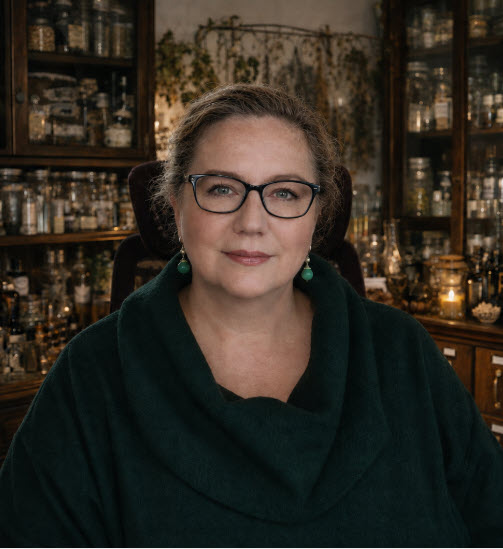
Kathy is an herbalist/naturopathy practitioner who is constantly researching to expand her knowledge. She came to herbalism after her migraine medicine was suddenly removed from the market and she had to find something new. After discovering the magic of herbs she’s never looked back. She is accredited by the International Practitioners of Holistic Medicine (IPHM) View her courses of study.