
Fall Harvesting in the Mid-Atlantic: Bringing the Season into the Apothecary
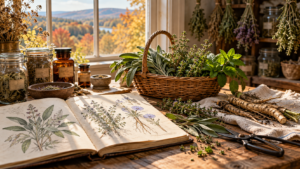
Image by Herbal Journal & OpenAI
There is something especially satisfying about an autumn harvest. The light softens, the mornings turn cool, and the garden begins to settle. A basket of herbs brought indoors feels like a little piece of the growing season saved for the quieter months ahead.
Here in the Mid-Atlantic, fall harvesting calls for observation more than a fixed date on the calendar. A sheltered garden in Maryland may still be flourishing while a hillside in Pennsylvania is preparing for frost. Watch your plants, follow your local forecast, and let the condition of each herb guide your decisions.
Gathering the Last Leaves
Healthy annual herbs can often be gathered until frost, but perennial herbs need time to prepare for winter. Avoid a heavy late-season cutting that encourages tender new growth; extension guidance recommends stopping perennial harvests about a month before the expected frost. A plant that still looks green is not necessarily ready to give another generous harvest. NC State Extension Publications
For leafy herbs, choose healthy growth and harvest after the dew has dried, before the day becomes hot. Use clean scissors and a clean basket or bowl, and remove damaged leaves and unwanted material before processing. University of Maryland Extension
Turning Our Attention to Roots and Seeds
Autumn is also a traditional season for gathering many herb roots after the foliage fades. Chicory (Cichorium intybus) is one example, though the appropriate harvest stage depends on the species and the part you intend to use. Identify and mark plants while their identifying features are still visible, rather than trying to recognize them from a few tired stems later. NC State Extension Publications
Root harvesting deserves particular care because digging may remove the entire plant. Favor cultivated plants, confirm identification, and learn the specific harvesting needs of each species before reaching for the shovel. Leave unfamiliar plants undisturbed.
Seeds have their own timing. For herbs grown for seed, watch for seed heads changing from green toward brown or gray, and gather before they open and scatter. A ventilated paper bag can help catch seeds as they finish drying. Leave some seed heads standing for wildlife and next season’s growth. NC State Extension Publications
Giving the Harvest a Good Home
Bringing herbs indoors is only the beginning. Drying and storage deserve the same attention as harvesting.
Use small, loose bundles or spread herbs in a single layer with good airflow. Large, crowded bunches can develop mold. If using a dehydrator, follow its instructions for herbs and check progress regularly. Leaves should crumble when fully dry, and stems should snap rather than bend. Store the finished herbs in airtight containers in a cool, dry, dark place. University of Maryland Extension
Before putting each jar away, give it a useful label: common and botanical names, plant part, harvest date, and source or location. In your harvest notes, record the fresh and dried weights, drying method, and any observations worth remembering. Was this year’s aroma especially strong? Did a batch take longer to dry? Those small details become valuable when you compare harvests or repeat a preparation.
An Invitation to Help Test Something Growing Behind the Scenes
Keeping track of those details is part of what inspired a project I have been quietly building: software designed around the everyday work of an herbal apothecary. It brings together inventory, formulas and their history, production records, batch traceability, and notes.
I’m looking for a few more beta testers, including newer herbalists and people working with smaller home apothecaries. You do not need a large business or a room full of equipment. I’d love feedback from people who are learning, making, and keeping track of their herbs in everyday practice.
Testing means exploring an early version, trying it with your own workflow, and sharing what feels useful, confusing, or missing. Testers will be asked to sign a confidentiality agreement while the project remains in private development.
If that sounds interesting, please contact me through Herbal Journal to learn more.
Meanwhile, I hope your autumn includes a little good gathering, a few thoughtfully labeled jars, and time to enjoy the season before it slips into winter.

Kathy is an herbalist/naturopathy practitioner who is constantly researching to expand her knowledge. She came to herbalism after her migraine medicine was suddenly removed from the market and she had to find something new. After discovering the magic of herbs she’s never looked back. She is accredited by the International Practitioners of Holistic Medicine (IPHM) View her courses of study.