
Catnip (Nepeta cataria): A Gentle Herbal Ally
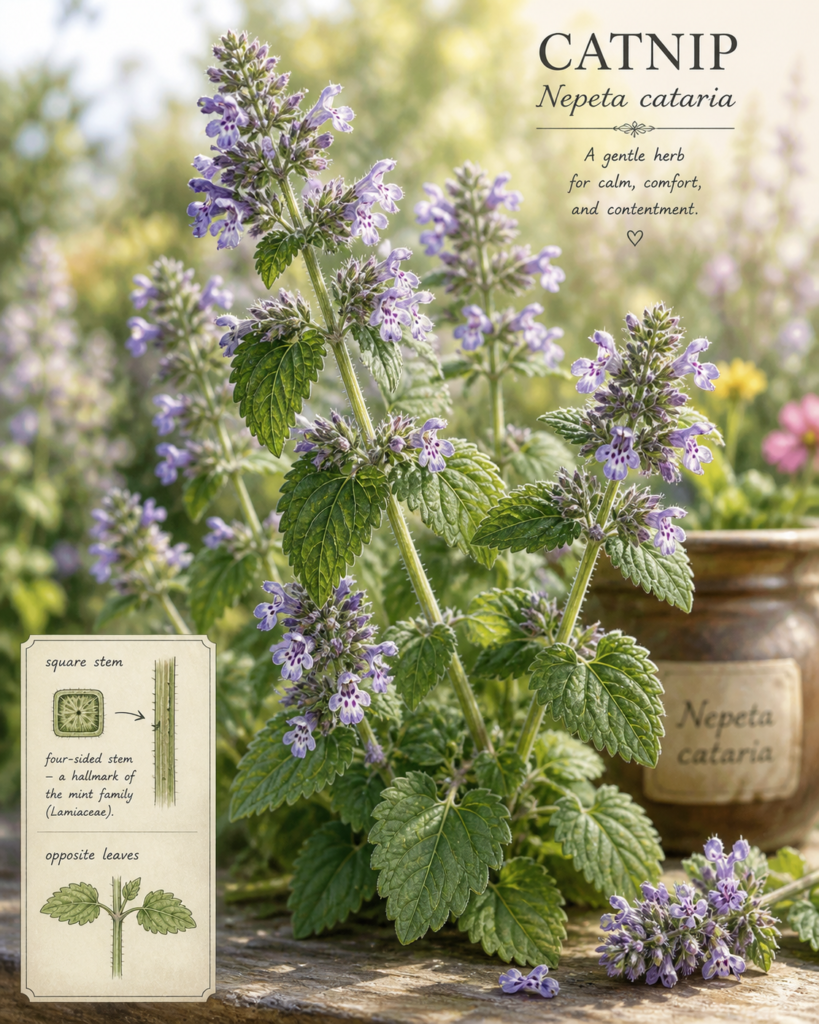
Catnip (Nepeta cataria) Image by Kathy McCabe and OpenAI
When most people hear the word catnip, they think of playful cats rather than herbal medicine. However, this humble member of the mint family has a long and respected history of use for humans, particularly for calming the nervous system and supporting digestion.
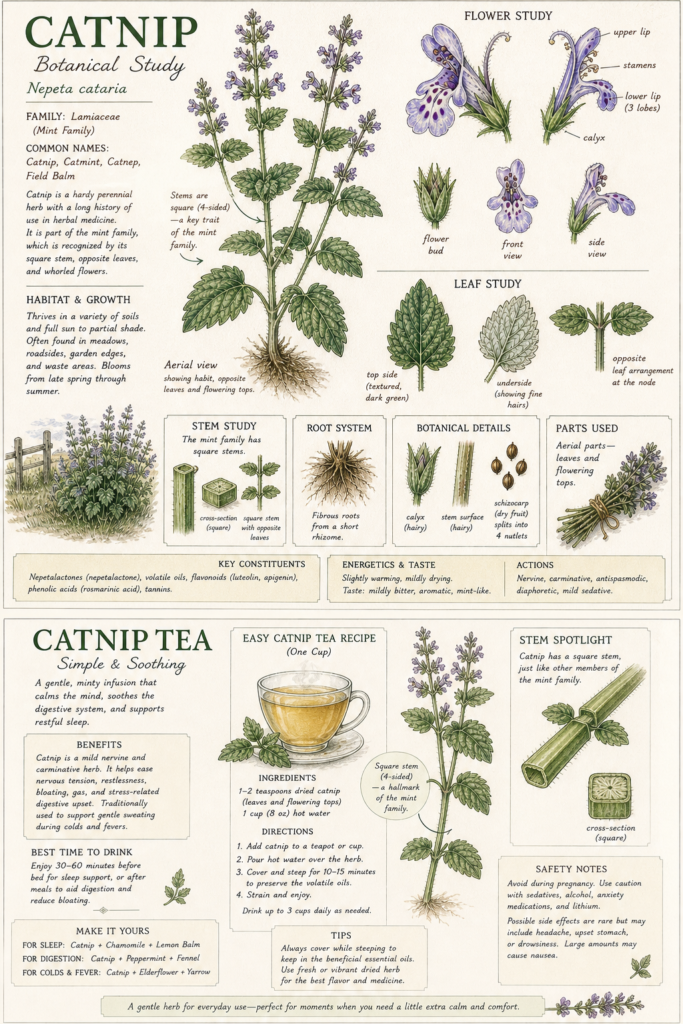
Catnip (Nepeta cataria) is a hardy perennial herb belonging to the Lamiaceae family. It features soft, gray-green leaves, slightly fuzzy square stems, and delicate white to pale lavender flowers with purple speckling. Although native to Europe and Asia, it has naturalized widely across North America and grows well in a variety of conditions, including here in the Mid-Atlantic region.
The medicinal parts of the plant include the leaves and flowering tops, often referred to as the aerial parts. These are typically harvested during the flowering stage when the plant’s aromatic compounds are at their peak.
Energetically, catnip is considered slightly warming and mildly drying, with a gentle, relaxing effect on the body. Its flavor is softly minty with a mild bitterness, making it a pleasant and approachable herbal tea.
Catnip is best known for its ability to gently calm the nervous system. It is often used for mild anxiety, restlessness, and that familiar “wired but tired” feeling that can make it difficult to unwind at the end of the day. While it is not a strong sedative, it provides a subtle sense of ease that can help the body transition into a more relaxed state.
In addition to its calming properties, catnip has a long tradition of use for digestive support. It is particularly helpful when digestive discomfort is linked to stress or tension. Individuals experiencing gas, bloating, mild cramping, or a nervous stomach may find catnip to be especially soothing. Its carminative and antispasmodic actions help relax the digestive tract and reduce discomfort.
Catnip Tea
HerbalJournal_Catnip (Download Info Sheet)
Catnip can also be used as a mild support for sleep, especially when restlessness or mental tension is the primary issue. It is often more effective when combined with other calming herbs, but on its own, it can help take the edge off and promote a sense of calm before bedtime.
Traditionally, catnip has also been used during colds and mild fevers. As a gentle diaphoretic, it may encourage light sweating and help the body move through the early stages of illness while easing restlessness.
The herb contains several beneficial compounds, including nepetalactones, volatile oils, flavonoids such as luteolin and apigenin, and phenolic acids like rosmarinic acid. These constituents contribute to its calming, digestive, and mild anti-inflammatory properties.
One of the simplest and most effective ways to use catnip is as a tea. To prepare, steep one to two teaspoons of the dried herb in a cup of hot water for about ten to fifteen minutes. Covering the cup during steeping helps preserve the aromatic oils. This tea can be enjoyed up to three times daily.
Catnip combines well with other herbs depending on the desired effect. For relaxation and sleep, it pairs nicely with chamomile and lemon balm. For digestive support, it can be blended with peppermint and fennel. During colds, it is often used alongside elderflower and yarrow.
While catnip is generally considered safe when used in moderate amounts, there are a few precautions to keep in mind. It is traditionally avoided during pregnancy due to potential uterine-stimulating effects. It should also be used cautiously alongside sedative medications, alcohol, or substances that affect the nervous system. There is also a theoretical interaction with lithium due to possible diuretic effects.
Adverse effects are rare but may include mild headache, digestive upset, or drowsiness. Larger amounts may cause nausea, so moderation is key.
Overall, catnip is a gentle and supportive herb that is best suited for everyday use. Its strength lies in its subtlety, making it an excellent choice when stress begins to show up physically, particularly in the digestive system or as restlessness at the end of the day. It is not a powerful or dramatic remedy, but it is dependable, approachable, and a wonderful addition to a well-rounded herbal practice.
Happy Harvesting

Kathy is an herbalist/naturopathy practitioner who is constantly researching to expand her knowledge. She came to herbalism after her migraine medicine was suddenly removed from the market and she had to find something new. After discovering the magic of herbs she’s never looked back. She is accredited by the International Practitioners of Holistic Medicine (IPHM) View her courses of study.