
Plantain: The Backyard Herb That Deserves a Place in Every Herbalist’s Apothecary
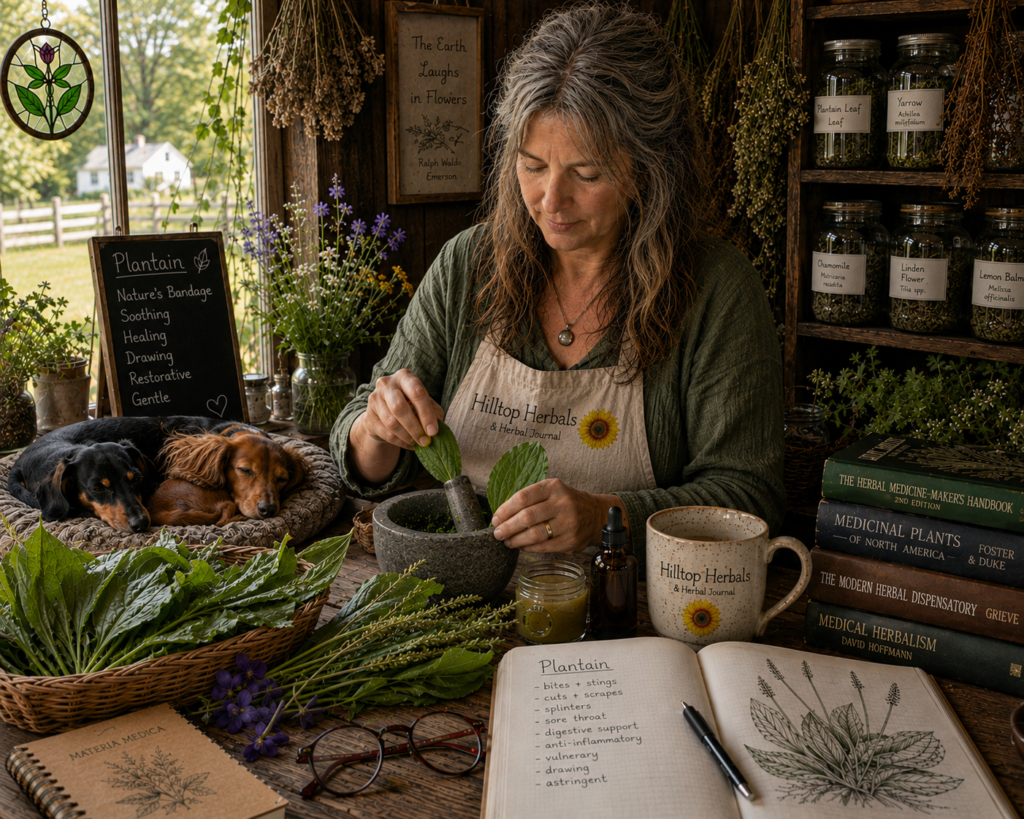
Image by Herbal Journal & OpenAI (Mac & Ginger are just for effect, I don’t actually let them up near my apothecary!)
Walk through almost any lawn, field edge, garden path, or roadside in North America and you’re likely to find plantain growing quietly underfoot. Few medicinal herbs are as widespread—or as overlooked—as this humble backyard healer.
Whether you’re dealing with a mosquito bite, a splinter, a scratchy throat, or irritated digestive tissues, plantain has a long history of traditional use for soothing, supporting, and restoring the body’s natural healing processes.
Meet Plantain
The medicinal plantain most herbalists use is either Broadleaf Plantain (Plantago major) or Narrowleaf Plantain (Plantago lanceolata). Both offer similar medicinal properties and are commonly found throughout the Mid-Atlantic region.
Plantain is often referred to as:
- Nature’s Bandage
- The First Aid Herb
- The Drawing Herb
- The Spit Weed
That last nickname comes from the traditional practice of chewing a fresh leaf and applying it directly to a bite, sting, or wound.
Plantain’s Medicinal Actions
Plantain offers an impressive combination of actions:
- Anti-inflammatory
- Demulcent
- Astringent
- Vulnerary (wound-healing)
- Antimicrobial
- Drawing
This unique blend allows plantain to both soothe irritated tissues and support the body’s natural healing processes.
Topical Uses
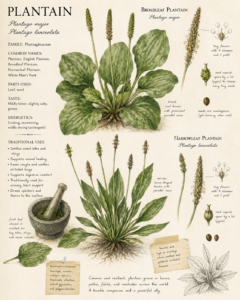
Botanical Study of Plantain by Herbal Journal & OpenAI
Insect Bites and Stings
Plantain is often the first herb herbalists reach for when dealing with:
- Mosquito bites
- Bee stings
- Wasp stings
- Ant bites
A fresh leaf crushed between the fingers and applied directly to the affected area may help calm itching, swelling, and irritation.
Splinters and Thorns
One of plantain’s most celebrated traditional uses is helping draw foreign objects toward the surface of the skin. A poultice of fresh leaves has been used for generations to assist with splinters, thorns, and minor embedded debris.
Minor Cuts and Scrapes
Plantain’s soothing and tissue-supportive properties make it a valuable addition to salves, oils, poultices, and wound washes.
Poison Ivy and Skin Irritation
Many herbalists use plantain to soothe itching and discomfort associated with poison ivy, minor rashes, and other skin irritations.
Sunburn Relief
A cooled infusion or compress can provide comforting relief for mild sunburn and overheated skin.
Internal Uses
While plantain is famous as a first-aid herb, its internal benefits deserve just as much attention.
Soothing the Digestive Tract
Plantain contains mucilage, which helps coat and soothe irritated tissues throughout the digestive system.
Traditionally, it has been used to support:
- Irritated stomach tissues
- Digestive inflammation
- Occasional digestive discomfort
- Sensitive digestive systems
Respiratory Support
Plantain has a long history of use for dry, irritated respiratory tissues.
Many herbalists use it to help soothe:
- Dry coughs
- Scratchy throats
- Seasonal throat irritation
Urinary Tract Support
Plantain is also considered a gentle herb for supporting urinary tract comfort and healthy tissue function.
Why Plantain Works
Plantain contains several beneficial constituents, including:
- Mucilage
- Tannins
- Flavonoids
- Iridoid glycosides
- Minerals
- Allantoin
Allantoin is particularly noteworthy because it supports tissue repair and regeneration, helping explain plantain’s reputation as a wound-healing herb.
A Favorite Plantain Tea Blend
Plantain tea is mild, earthy, and slightly grassy. While beneficial on its own, I often recommend pairing it with complementary herbs that enhance both flavor and therapeutic value.
Soothing Plantain & Marshmallow Tea
This blend is especially lovely for irritated throats, dry coughs, and digestive discomfort.
Ingredients
- 1 tablespoon dried plantain leaf
- 1 tablespoon dried marshmallow root
- 1 teaspoon dried chamomile flowers
Directions
- Place herbs in a tea infuser or jar.
- Pour 2 cups of hot water over the herbs.
- Cover and steep 15–20 minutes.
- Strain and enjoy.
Benefits
- Plantain soothes irritated tissues.
- Marshmallow provides additional mucilage and moisture.
- Chamomile adds gentle digestive support and a pleasant floral flavor.
Plantain & Lemon Balm Wellness Tea
For a lighter daily tea, combine:
- 1 tablespoon dried plantain leaf
- 1 tablespoon dried lemon balm
- 1 teaspoon dried spearmint
This blend offers:
- Digestive support
- Gentle calming effects
- Respiratory comfort
- A brighter, more enjoyable flavor profile
For those who find plain plantain tea a little earthy, this combination is often a favorite.
Harvesting Plantain
When harvesting plantain:
- Choose clean locations free from pesticides and herbicides.
- Avoid roadsides and heavily trafficked areas.
- Harvest young, healthy leaves whenever possible.
- Dry leaves promptly for long-term storage.
Safety Considerations
Plantain is generally considered one of the safest medicinal herbs for most people.
As always:
- Properly identify any wild plant before use.
- Use caution if allergies are suspected.
- Seek medical attention for serious wounds, infections, or allergic reactions.
Final Thoughts
Plantain may not have the glamour of exotic herbs or rare botanicals, but few plants offer such a wide range of practical benefits. From bug bites and splinters to digestive support and soothing teas, this common backyard herb has earned its place in herbal traditions around the world.
Sometimes the most valuable plants aren’t found in specialty catalogs or expensive herbal shops. Sometimes they’re growing quietly beneath our feet, waiting to remind us that nature often provides exactly what we need.
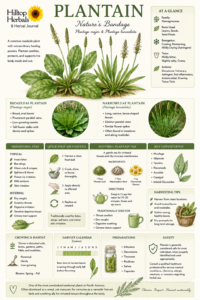
Be sure to download the plantain infographic!
Kathy – Hilltop Herb Woman
References
Brinker, F. (2010). Herb Contraindications and Drug Interactions (4th ed.). Eclectic Medical Publications.
Chevallier, A. (2016). Encyclopedia of Herbal Medicine (3rd ed.). DK Publishing.
Foster, S., & Duke, J. A. (2014). Peterson Field Guide to Medicinal Plants and Herbs of Eastern and Central North America (3rd ed.). Houghton Mifflin Harcourt.
Grieve, M. (1931). A Modern Herbal. Dover Publications.
Hoffmann, D. (2003). Medical Herbalism: The Science and Practice of Herbal Medicine. Healing Arts Press.
Mills, S., & Bone, K. (2005). The Essential Guide to Herbal Safety. Elsevier Churchill Livingstone.
Tilgner, S. (2009). Herbal Medicine From the Heart of the Earth. Wise Acres Press.
Upton, R. (Ed.). (2011). American Herbal Pharmacopoeia and Therapeutic Compendium: Plantago Leaf. American Herbal Pharmacopoeia.
United States Department of Agriculture. (USDA). Plant Profile: Plantago major L. and Plantago lanceolata L.
World Health Organization (WHO). (1998). WHO Monographs on Selected Medicinal Plants, Volume 1.
Historical Note
The common name “White Man’s Foot” has been documented in historical ethnobotanical literature and refers to the observation by some Indigenous peoples that plantain appeared to follow European settlement across North America as seeds were unintentionally spread through travel, livestock, and agricultural activities.
Thanks for reading!
Kathy

Kathy is an herbalist/naturopathy practitioner who is constantly researching to expand her knowledge. She came to herbalism after her migraine medicine was suddenly removed from the market and she had to find something new. After discovering the magic of herbs she’s never looked back. She is accredited by the International Practitioners of Holistic Medicine (IPHM) View her courses of study.