
The Medicinal Benefits of Pine & Spruce
A South‑Central Pennsylvania Herbalist’s Guide
South‑Central Pennsylvania is blessed with an abundance of evergreens — especially Eastern White Pine, Virginia Pine, Pitch Pine, and several spruce species commonly planted in homesteads and woodlots. These trees aren’t just winter icons; they’re potent, time‑honored medicines used by Indigenous communities, European settlers, and modern herbalists alike.
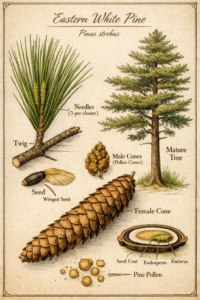
Image by Kathy McCabe and OpenAI
This guide explores the chemistry, traditional uses, and practical applications of the pines and spruces you’ll find right here in the South Mountain foothills.
Key Species in South‑Central PA
Eastern White Pine (Pinus strobus)
The most medicinally versatile pine in the region. Soft needles, mild flavor, and gentle energetics.
Virginia Pine (Pinus virginiana)
Shorter needles, stronger resin aroma. Excellent for topical and respiratory uses.
Pitch Pine (Pinus rigida)
Resin‑rich and historically used for salves, poultices, and wound care.
Common Spruce (Blue Spruce, Norway Spruce)
Not native but widely planted. Their resins and needles offer similar benefits to pine, often with a sharper, more camphoraceous profile. Spruce has warming properties in the resin, which make it very beneficial in salves.
️ Respiratory Support
Pine and spruce have long been used for coughs, congestion, sinus infections, and seasonal respiratory discomforts.
Why They Work
- Needles contain volatile oils (pinene, limonene, bornyl acetate) that act as expectorants, helping loosen mucus.
- Traditional herbalists used pine‑top teas for colds, fevers, and stubborn phlegm.
- Steam inhalations with pine needles were used to break up congestion and soothe irritated lungs.
How to Use
- Tea: Fresh or dried needles steeped 10–15 minutes.
- Steam: A handful of needles in hot water; inhale deeply.
- Resin balm: Pine or spruce resin infused into oil for chest rubs.
Antimicrobial & Immune Support
Pine and spruce resins are naturally antibacterial, antimicrobial, and antiseptic.
Traditional Uses
- Resin applied to cuts, burns, and splinters as wilderness first aid.
- Resin‑based salves used for wound healing and skin infections.
Why It Works
Tree resins contain powerful compounds that protect the tree from pathogens — and can support humans in similar ways.
Musculoskeletal Relief
Winter in the South Mountain region often brings stiff joints and muscle aches. Pine and spruce shine here.
Benefits
- Resin stimulates surface circulation, easing tension and inflammation.
- Used in muscle rubs, joint salves, and warming liniments.
Best Species for Topicals
- Pitch Pine (very resin‑rich)
- Virginia Pine
- Spruce (especially for aromatic, penetrating balms)
Mood, Grounding & Emotional Support
Evergreens have long been associated with clarity, grounding, and emotional steadiness.
- Aromatic compounds promote a sense of calm and focus.
- Indigenous traditions burned pine needles to dispel nightmares and clear stagnant energy.
Spruce, in particular, has a bright, uplifting scent that pairs beautifully with winter wellness rituals.
How to Harvest & Use Pine Safely
South‑Central PA offers year‑round access to evergreen medicine, but timing matters.
Best Harvesting Windows
- Late winter–early spring: Highest vitamin C and volatile oils.
- Spring tips: Gentle, nutrient‑rich, great for teas and syrups.
- Summer: Resin is abundant for salves and oils.
Safety Notes
- Avoid Ponderosa Pine (not common in PA but worth noting).
- Always harvest from clean, unsprayed areas.
- Start with small amounts if you’re new to pine internally.
Pine vs. Spruce: Quick Comparison
| Feature | Pine (local species) | Spruce (common plantings) |
|---|---|---|
| Flavor | Mild, slightly citrusy | Sharper, more camphoraceous |
| Best For | Teas, steams, tinctures | Resins, chest rubs, aromatic uses |
| Needles | Soft, flexible | Stiff, square, roll between fingers |
| Resin | Abundant in Pitch & Virginia pine | Very aromatic, excellent for salves |
Bringing It Home: Simple Preparations
Pine Needle Tea
- Bright, citrusy, vitamin‑rich
- Supports immunity and respiratory health
Spruce Resin Salve
- Excellent for winter muscle aches
- Antimicrobial and warming
Pine Steam Inhalation
- Clears congestion
- Comforting during cold months
Final Thoughts
Pine and spruce are more than evergreens in your backyard — they’re accessible, sustainable, and deeply traditional medicines rooted in the ecology of South‑Central Pennsylvania. Whether you’re crafting teas for winter wellness, salves for sore muscles, or educational content for your community, these trees offer a wealth of healing potential.
Kathy McCabe

Kathy is an herbalist/naturopathy practitioner who is constantly researching to expand her knowledge. She came to herbalism after her migraine medicine was suddenly removed from the market and she had to find something new. After discovering the magic of herbs she’s never looked back. She is accredited by the International Practitioners of Holistic Medicine (IPHM) and is an Associate Member of the American Herbalist Guild.